Lithuanian history
Articles on Lithuania’s past. Every paragraph names its sources, and differing accounts are shown side by side.
Timeline
-
-
Prehistory – 1236
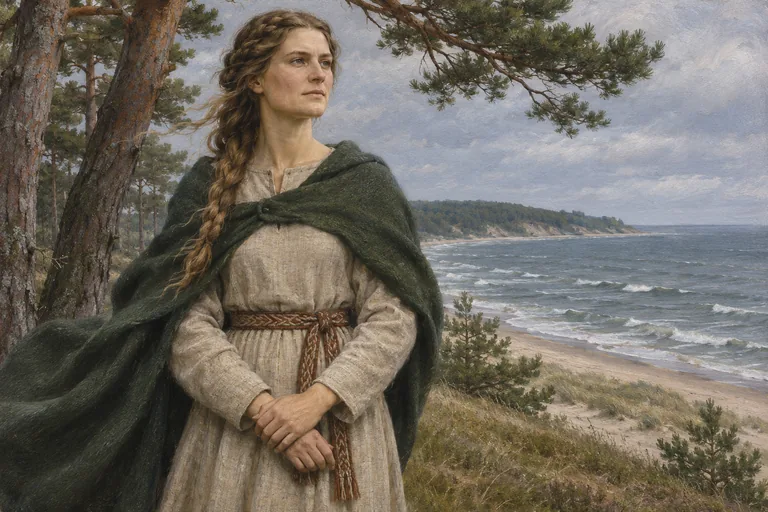
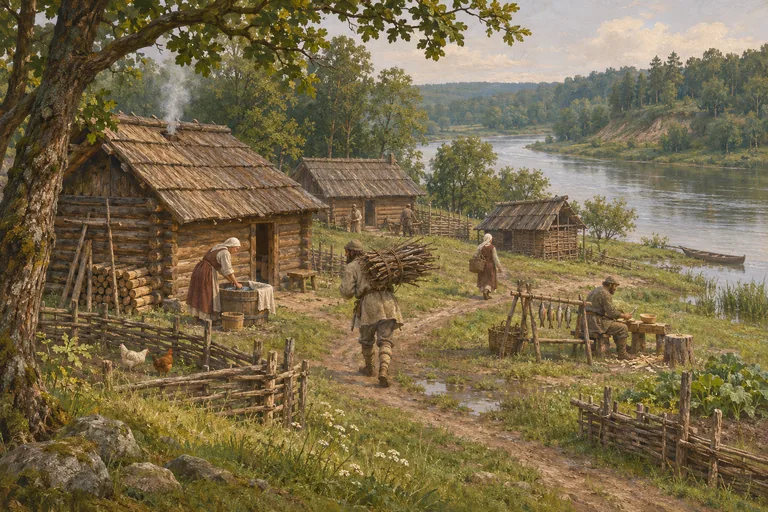
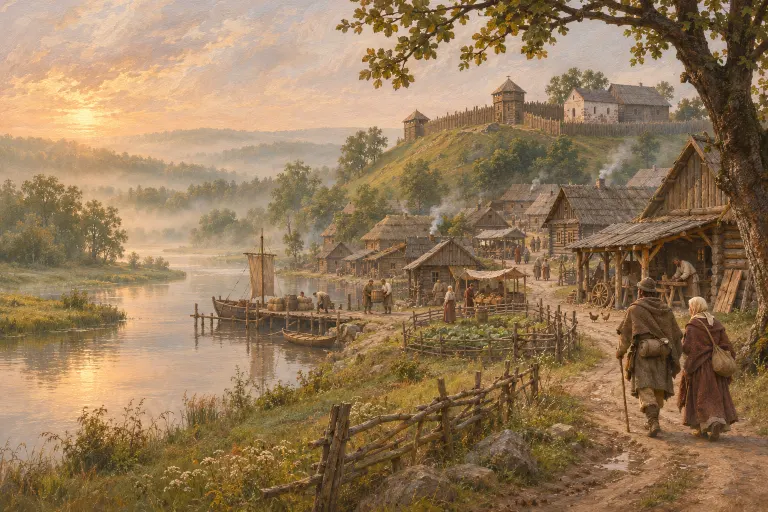
First inhabitants and the Balts
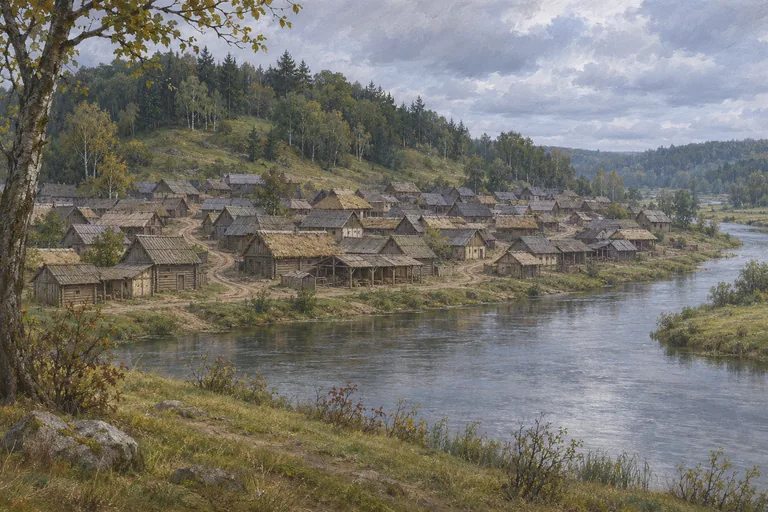
From the first riverside camps to Baltic communities and the name of Lithuania in the written record.
-
1009 – the 1230s
From Lithuania’s name to Mindaugas’s rise
What happened between the record of 1009 and Mindaugas’s rise: communities, lands, neighbours and agreements between dukes.
-
22 September 1236
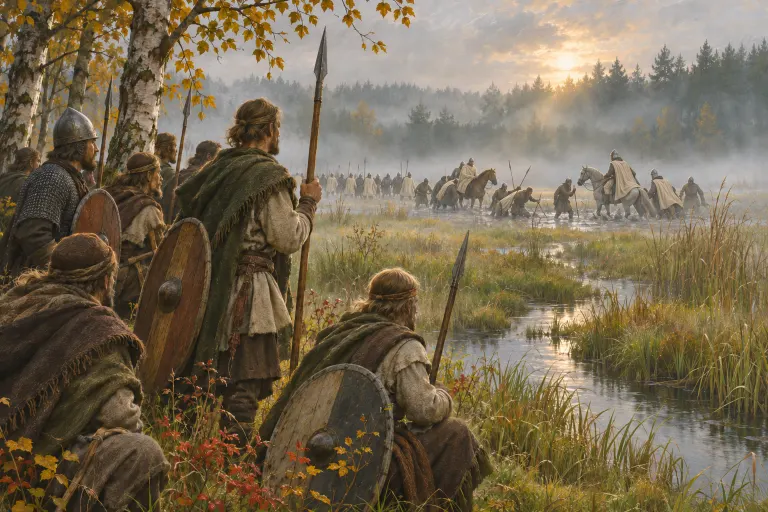
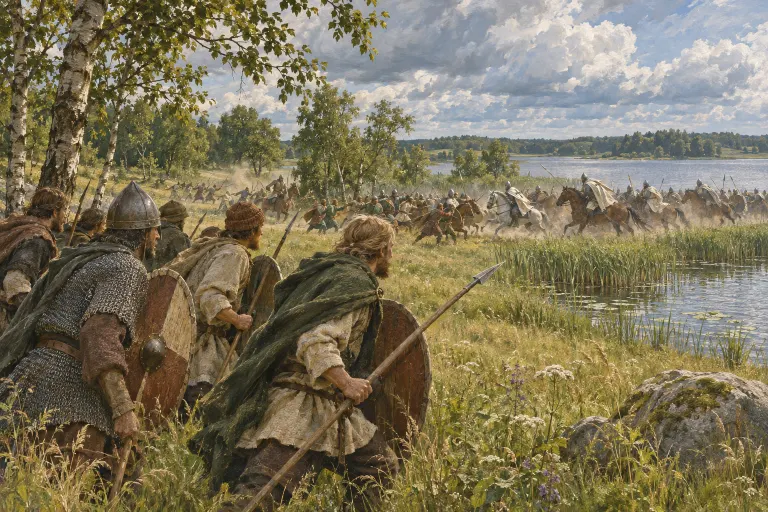
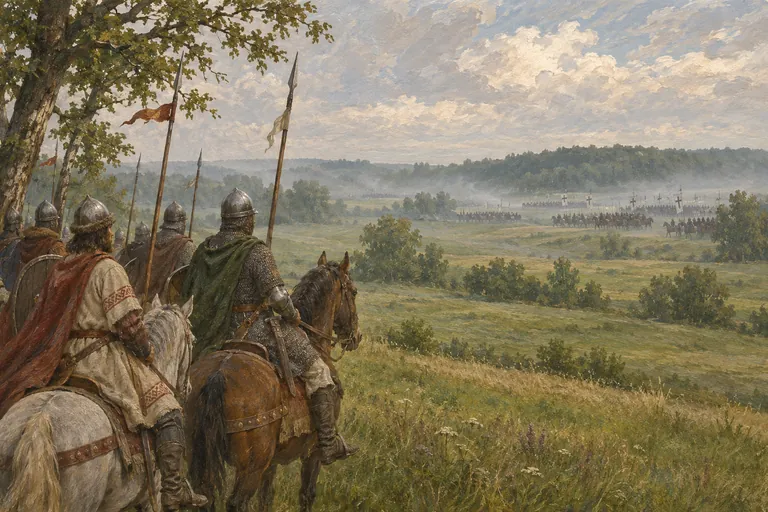
The battle of Saule: a turning point for the Swordbrothers
The victory of 1236 that preceded the Swordbrothers’ loss of independence: the campaign, difficult terrain and questions about the commander and battlefield.
-
-
-
1236–1569
The Grand Duchy of Lithuania
From the crown of Mindaugas and Gediminas’s letters to Vytautas, Grunwald, written law and the Union of Lublin.
-
c. 1230–1263 · First recorded in 1219
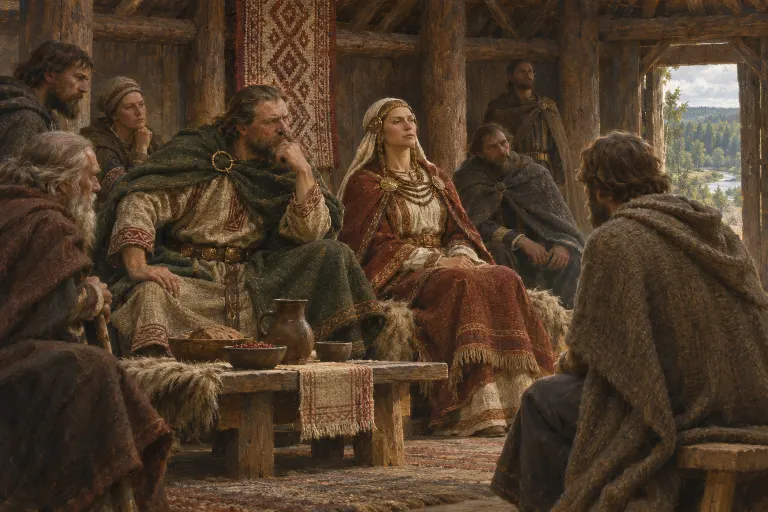
The age of Mindaugas: power, baptism and the crown
Mindaugas’s rise through civil war, baptism in 1251 and coronation in 1253 to the crisis of 1263. What we know about him, and where the sources leave room for doubt.
-
Medieval rule · Riga in 1298 · dispute at Constance
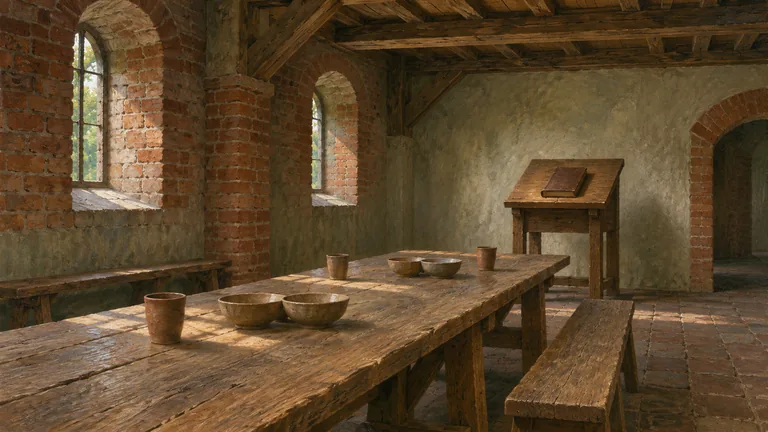
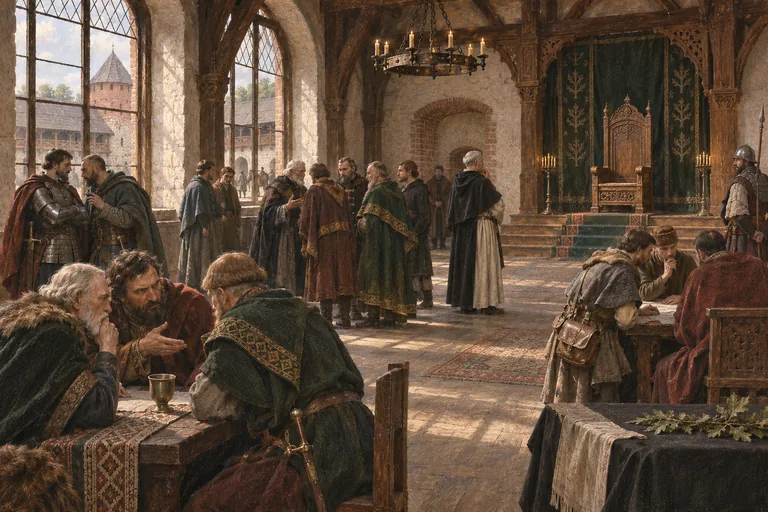
The Teutonic Order and Lithuania: war, faith and diplomacy
The Order’s rule joins vows, common property, care of the sick and military service. Riga’s documents and the reply of Jogaila and Vytautas’s envoys at Constance show religious language becoming part of political dispute. These different voices reveal an institution whose history extends beyond a list of battles.
-
13 July 1260
The battle of Durbe: a victory that shook the order
The Samogitian victory in Courland in 1260: a diverted campaign, the Curonian role, uprisings and a change in Mindaugas’s policy.
-
1263–c. 1316
Between Mindaugas and Gediminas: how the Lithuanian state endured
After the killings of 1263, power changed hands repeatedly. The lives of Vaišelga, Švarnas, Traidenis and Vytenis lead through wars, monasteries, new settlements and an alliance with Riga.
-
Late thirteenth–early fifteenth century · the Nemunas frontier
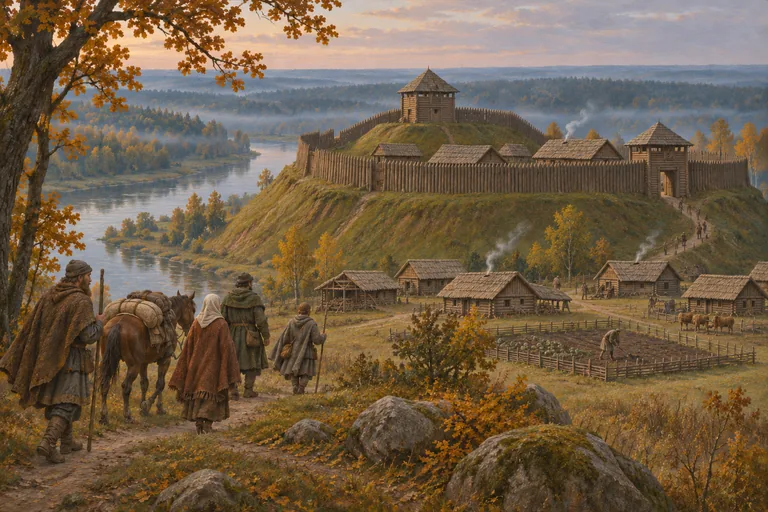
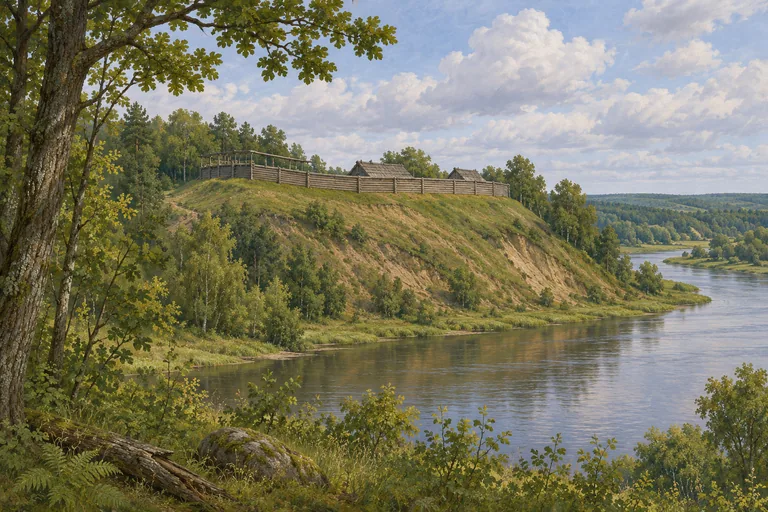
Castles of the Nemunas: life on the frontier
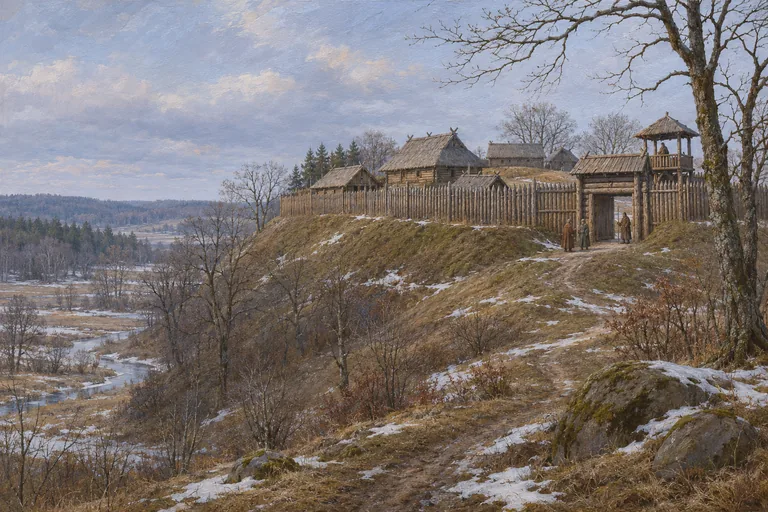
Castles along the Nemunas needed more than walls: guard rotations, harvests, bridges and river routes sustained them. At Bisenė, Veliuona, Pieštvė and Kaunas, building resumes after attacks, and a castle’s fall does not always end a place’s history. Chronicles and modern studies reveal different sides of this frontier.
-
c. 1275–1341 · ruled c. 1316–1341
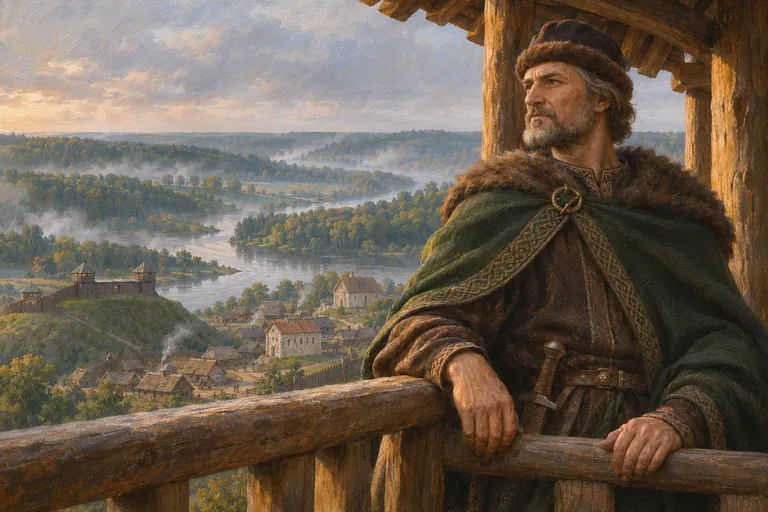
Gediminas: Vilnius, letters and dynastic power
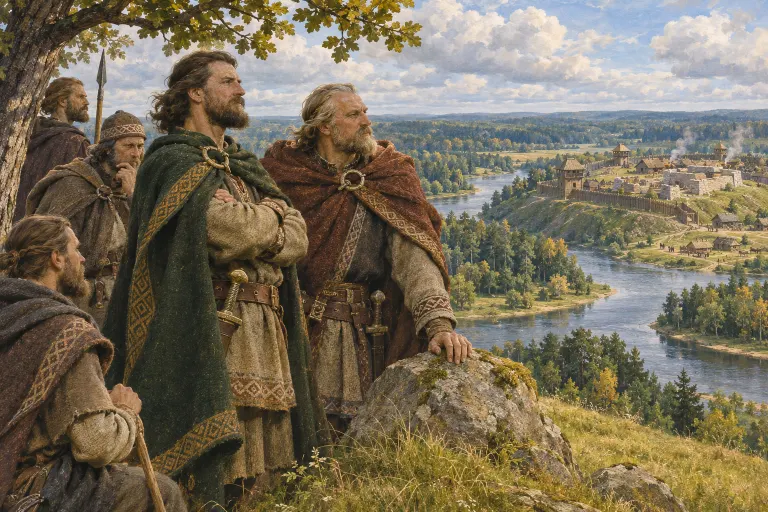
Gediminas’s life and reign: the Vilnius letters, conversion negotiations, warfare on the Nemunas, Riga, family alliances and the lands of Rus’. Alongside the historical evidence are later accounts of the capital’s foundation and the ruler’s death.
-
13th century–first quarter of the 16th century
Vilnius to the early 16th century: how a multilingual city grew
From early settlement traces to the city wall: a story of castles, streets, crafts and distinct communities.
-
1336 and later tellings
Pilėnai: siege, story and memory
The attack on Pilėnai in 1336 left accounts of resistance, killing and people taken alive. Older histories tell the siege differently; searches for the castle and later works of art add further layers to its memory.
-
Fourteenth–fifteenth centuries · later memory and restoration
Trakai: castles, rulers and communities
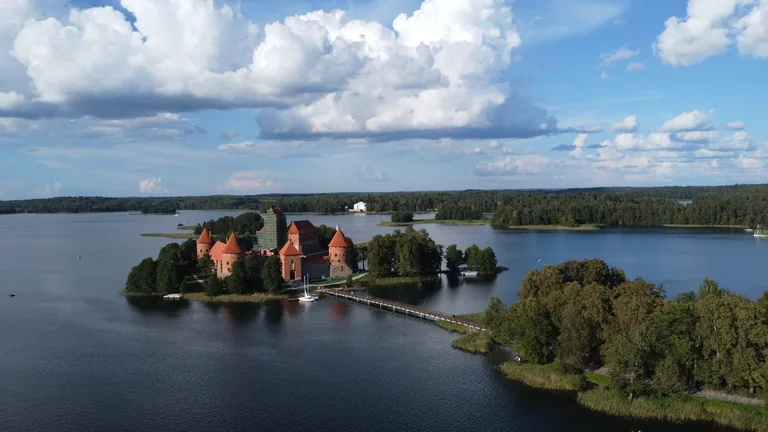
Beyond the familiar Island Castle lies a longer story: the buried walls of Senieji Trakai, rival rulers, Karaim memory and the work of restorers.
-
1345–1377
The age of Algirdas: between west and east
The rule of Algirdas and his brother Kęstutis, fighting along the Nemunas, expansion into Rus’ and ambitions reaching the approaches to Moscow.
-
Fourteenth century–1434 · Lithuanian ruler from 1377 · King of Poland from 1386
Jogaila: ruler of Lithuania and king of Poland
Algirdas’s heir, Kęstutis’s rival, Vytautas’s cousin and king of Poland: Jogaila’s life from the struggle for Vilnius to a royal dynasty that outlived its founder.
-
c. 1300–1382 · grand duke 1381–1382
Kęstutis: castles, negotiations and the struggle for Vilnius
Gediminas’s son, Algirdas’s brother and Jogaila’s rival: Kęstutis’s life from Trakai and the Nemunas castles to his brief grand-ducal rule, captivity at Krėva and the different stories of his remembrance.
-
Thirteenth–sixteenth centuries · 1251, 1387 and 1417
Lithuania’s conversion: rulers, communities and changing beliefs
From Mindaugas’s baptism and Gediminas’s letters to Vilnius, Samogitia and distant parishes: how rulers’ promises founded churches and brought a new faith into people’s lives.
-
c. 1350–1430 · ruled 1392–1430
Vytautas the Great: power, war and an unfulfilled coronation
From captivity at Krėva and two alliances with the Order to Grunwald, the Treaty of Melno and the pursuit of a crown: Vytautas’s life, his realm and how later generations remembered him.
-
War of 1409–1411 · battle on 15 July 1410
The Battle of Grunwald: the road to victory and its aftermath
The Battle of Grunwald on 15 July 1410: the Samogitian rising, the alliance of Jogaila and Vytautas, the clash of armies, the Lithuanian wing’s withdrawal and the unsuccessful siege of Marienburg. The history edited by Šapoka, alongside accounts by Kojelavičius, Narbutas and the Bychowiec Chronicle, provides the narrative; later research addresses specific questions.
-
1430–1440 · a coda to 1452
After Vytautas: Švitrigaila, Žygimantas and Pabaiskas
After Vytautas’s death, a dispute over the throne became a civil war. Noble interests, relations with Poland, the Order’s support and privileges for nobles all played a part in the rivalry between Švitrigaila and Žygimantas Kęstutaitis. Victory at Pabaiskas changed the balance without finally settling who would rule Lithuania, or by what right.
-
8 September 1514 · the war of 1512–1522
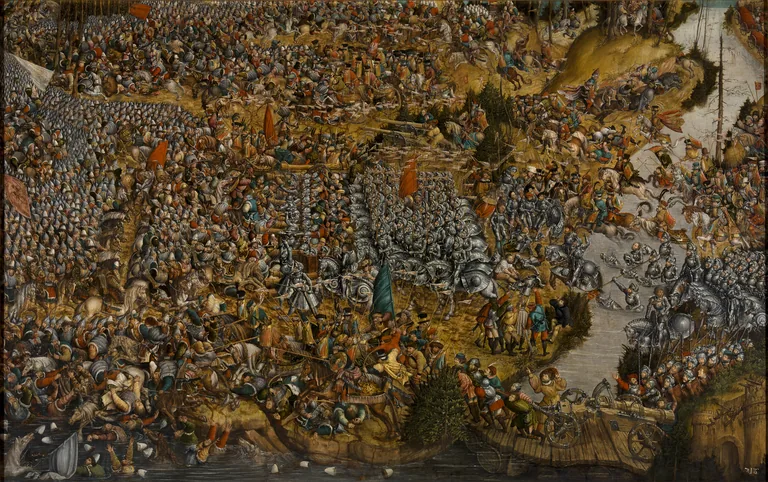
The Battle of Orsha: the victory that did not recover Smolensk
On 8 September 1514, an army commanded by Konstantinas Ostrogiškis defeated Muscovite forces near Orsha. Smolensk was not recovered, and the war continued. The article follows the allied army, disputes over numbers and tactics, and the victory’s spread through the ruler’s letters.
-
1529 · 1566 · 1588 · a legal afterlife to 1840
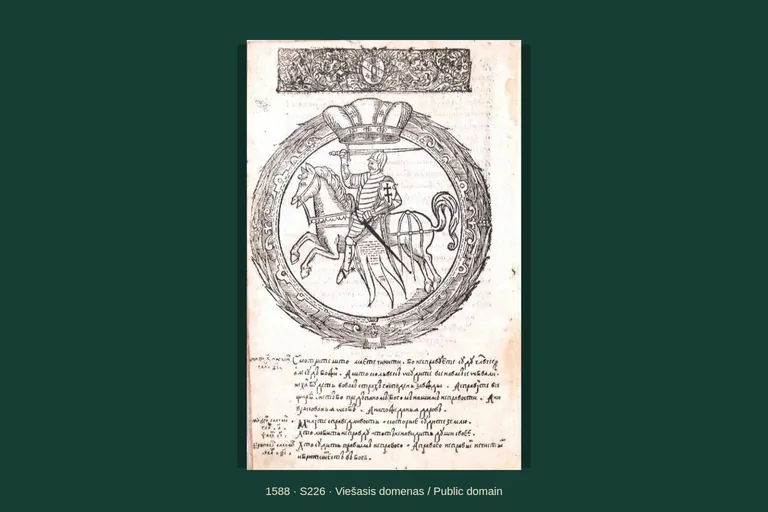
The Statutes of Lithuania: written law and unequal freedoms
The three Statutes of Lithuania — of 1529, 1566 and 1588 — defined the ruler’s obligations, noble liberties, court procedure and landholding. This written law belonged to a society of estates, where rights differed by status. Cases and privileges help reveal how its provisions worked in everyday life.
-
-
-
Sixteenth–twentieth centuries · earlier context and later memory
Lithuania Minor and the lietuvininkai: language, faith and a lost world
In Prussia, sermons were preached in Lithuanian, books were printed and The Seasons was written. A shared language did not mean a single identity. The story of Lithuania Minor leads from parishes and printing houses to communities broken apart by war.
-
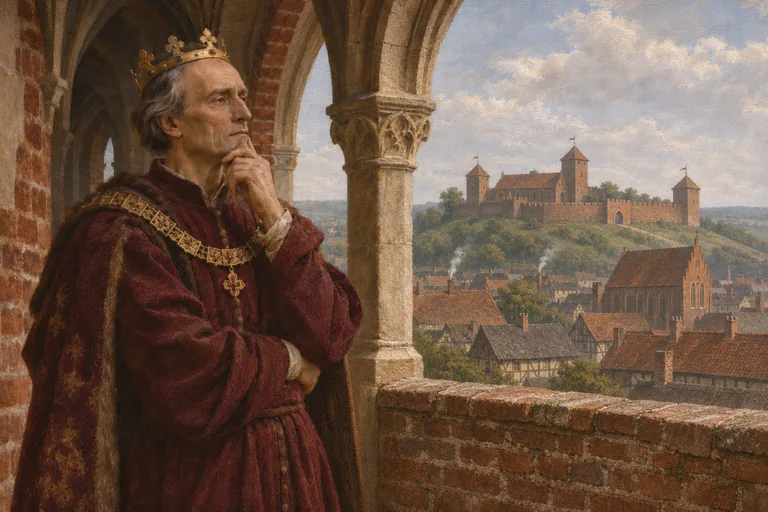
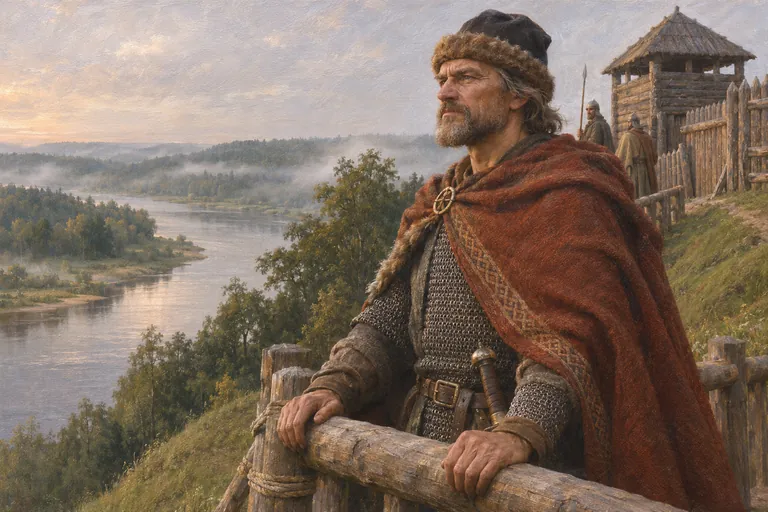
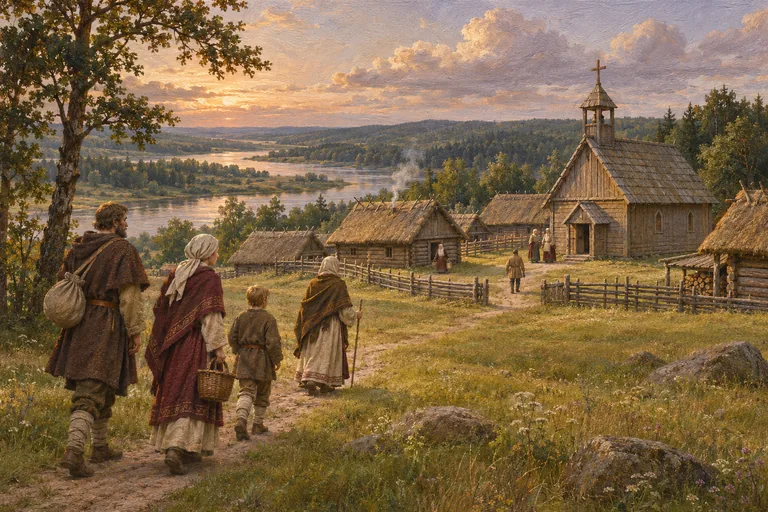
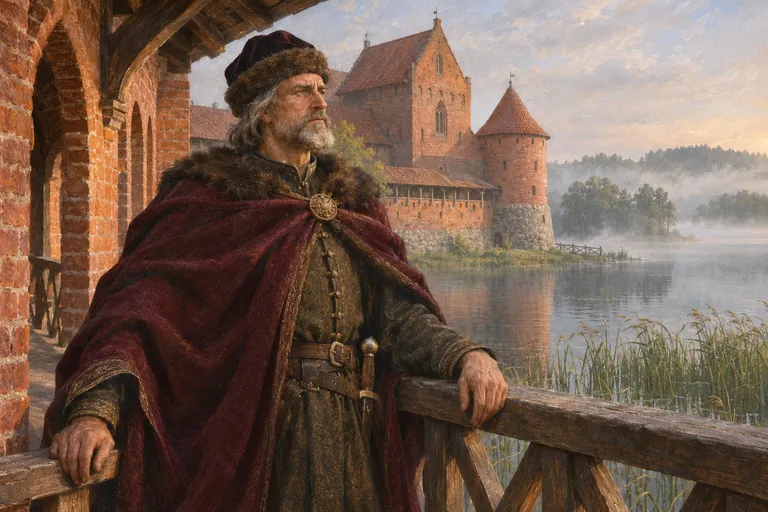
Themes and regions
-
The 1009 entry · older legends · linguistic hypotheses
Lithuania’s name: rivers, people and legends
The entry for 1009, the Lietava stream, war-band and leičiai interpretations, and older chronicle legends: different paths towards the origins of Lithuania’s name.
-
Fifth–thirteenth centuries · later echoes
Curonians: sea routes, belief and stories
The Curonian lands and their people: Apuolė, Baltic voyages, ornaments, diviners, Durbe and later stories of lagoon giants and amber palaces.
-
Archaeological layers · thirteenth-century questions · today
Lopaičiai: a hillfort, a spring and people’s memories
What is Lopaičiai? The hill’s archaeology, the question of Vykintas’s castle, the spring, stones and local people’s stories.
-
Thirteenth-century testimony · later folklore
Ancient Lithuanian mythology: deities and mythical beings
Fourteen illustrated portraits, from Perkūnas and Medeina to Gabija, laumės, aitvarai and kaukai. Deities, legends and testimony from different periods.
-
Early settlement, thirteenth-century wars and later memory
Yotvingians: southern Baltic lands and legacy
Forests, lakes and the Nemunas form the setting for Yotvingian and Sudovian history. Archaeology and contrasting older accounts reveal work, war, displacement and the ways later generations remembered this country.
-
Prehistory–twenty-first century
Kernavė: hillforts and life in a medieval town
Kernavė’s hills, former town and local stories preserve different histories of one place. Written accounts, archaeological work and recorded folklore each offer a way into its past, with their own origins and perspectives.
-
Prehistory–twentieth century · Great Uprising, 1260–1274
The Prussians and Herkus Mantas: lands, resistance and remembrance
Prussian history began long before the Great Uprising and continued after its defeat. Coastal settlements, amber exchange, separate lands and accounts of belief reveal the world from which the Natangian leader Herkus Mantas emerged.
-
The Iron Age, thirteenth-century wars and later stories
Semigallians: river country, strongholds and memory
Semigallians grew crops, built strongholds and defended their lands along the Mūša and Lielupė. Cemeteries, chronicles, later historians and local tales preserve different parts of their history.
-
Medieval accounts · interpretations and recordings, nineteenth–twenty-first centuries
Alkai and Sacred Places: Landscape, Sources and Legends
Daukantas writes of inviolable groves, but also explains their protection through the uses of woodland. Dusburg describes Prussian sacred waters in a Christian chronicler’s words. Accounts from Perkūnakiemis, Šatrija and Plateliai bring particular places closer: a village, a vanished oak, a festive hill and a lake known through its names.
-
Baltic language relationships · sixteenth–nineteenth-century writings · modern research
Baltic Languages and the Path of Lithuanian
Daukantas traced the survival of language through mothers, everyday speech and songs. Manuscripts and books reveal its path into writing. Related Lithuanian, Latvian and Old Prussian words, alongside the history of a single conjunction, reveal a shared inheritance, linguistic change and encounters between languages.
-
First millennium BC – Middle Ages · later accounts
Baltic Burial Customs: What Graves Reveal
Cremated bones found in an ancient Kveciai barrow proved medieval. From western Lithuania’s stone enclosures to the horse graves at Marvelė, research reveals different ways of burying the dead. Bone dates, vessels and stone structures allow changes in burial places to be traced, although they have not preserved everything the living did or thought.
-
First millennium–thirteenth century · archaeology and accounts
Selonians: between Lithuania and Latvia
Hillforts, settlements and burial mounds reveal Selonia’s past on both sides of today’s Lithuanian–Latvian border. Finds from Juodonys, Stupeļi and Visėtiškės stand alongside Henry’s chronicle of warfare along the Daugava. Researchers draw the region’s boundaries differently and debate its centres.
-
From early traces to living tradition
Samogitians: history, living language and legends
Samogitian history, from archaeological traces and warfare to conversion, books and a living language. Alongside it are the region’s different legends.
-
The fourteenth century and later tellings
Birutė: a woman between chronicle and legend
Stories take Birutė from Palanga to Trakai, into a ruling family and the crisis of 1382. Chronicles, historians, local tales and poetry tell her life differently.
-
Thirteenth–fifteenth centuries · countryside, town and court
Everyday Life in Medieval Lithuania
A floor in a Vilnius house, charred grain at Merkinė, a craft yard in Kernavė. Objects and obligations reveal how people lived in the thirteenth to fifteenth centuries: what they grew, made, exchanged and owed to others. Life in the countryside, the town and the ruler’s court differed. No single house or menu can encompass those differences.