2.1
The crown of Mindaugas
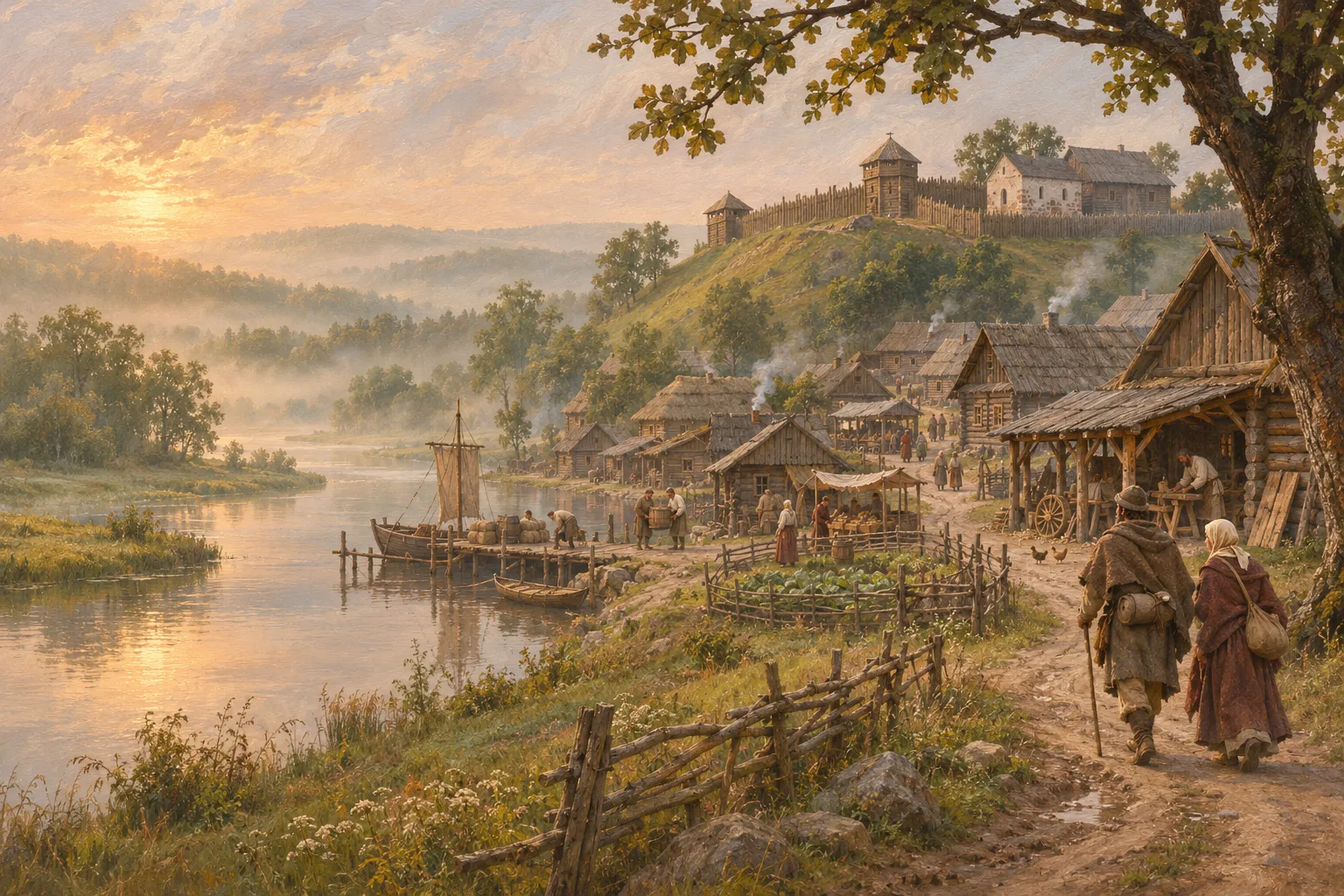
In the middle of the thirteenth century, Lithuania’s ruler seeks a place among the monarchs of Christian Europe.
After consolidating power and fighting his rivals, Mindaugas accepted baptism. The history edited by Šapoka dates this turn to 1251 and the coronation to 1253. Baptism, papal approval and the royal title were connected steps towards international recognition. S6
The crown did not end the internal struggles. Alongside the diplomatic achievement, the 1936 synthesis describes rivalries over power, the establishment of a bishopric and conflicts over Žemaitija. State formation took time: the ruler’s decisions, local powers and neighbouring interests continually shaped one another. S6
Based on: S6
2.2
Gediminas writes to Europe
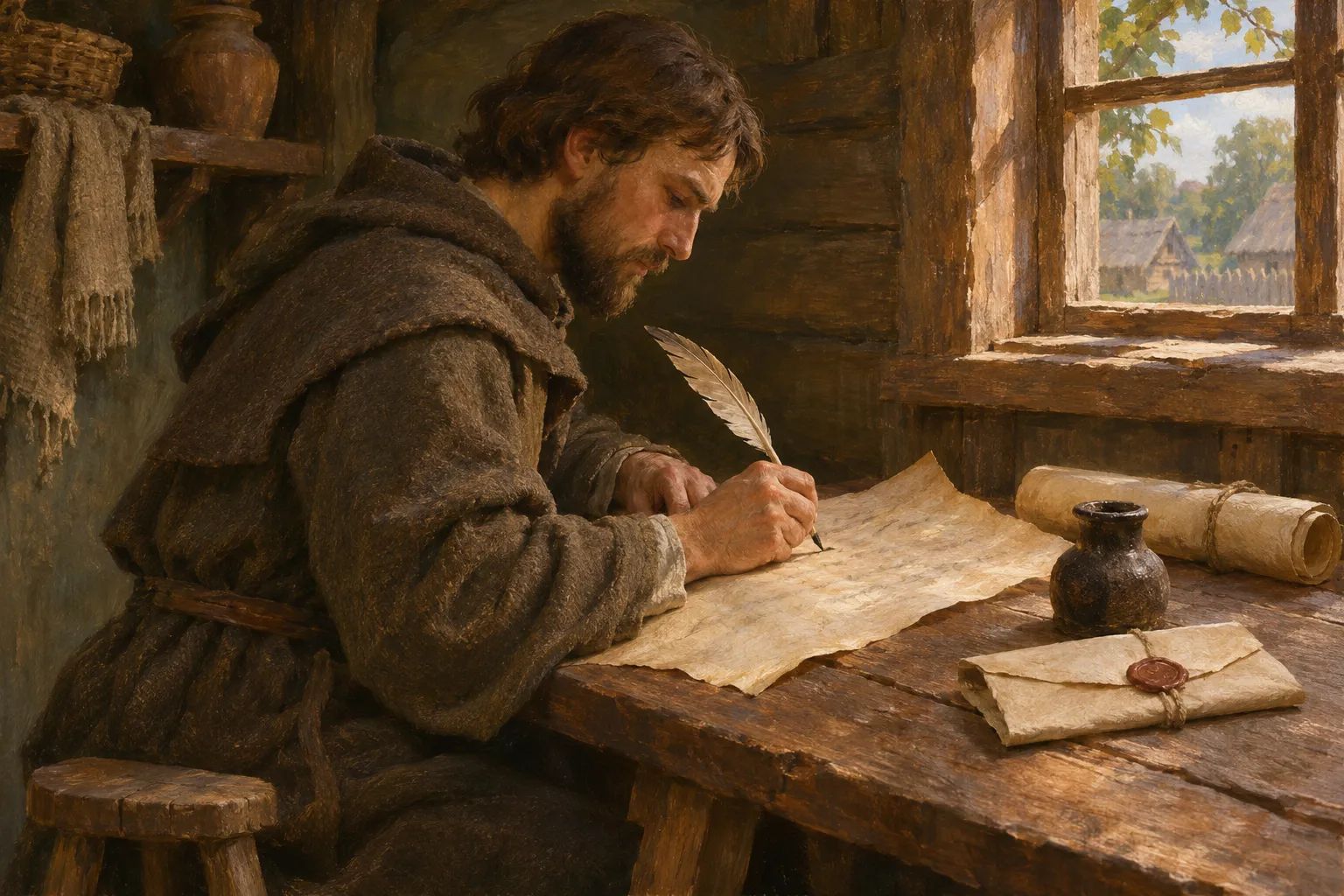
The letters reveal a ruler who wages war, negotiates and invites people to make a life in his lands.
In letters to the pope and western towns, Gediminas brought together diplomacy, religion and economic affairs. The 1936 synthesis discusses his invitations to townspeople, craftspeople and clergy alongside his disputes with the Teutonic Order. The letters show Vilnius as a place of international connections, making 1323 an important written landmark in its history. S6
The letters record an already existing Vilnius. Šapoka’s edited account does not establish exactly when the city was settled or when the ruler moved there. The origin legend offers a different account of the city’s beginnings, to be read alongside the documentary evidence. S6
Based on: S6
2.3
A state of many lands
The Grand Duchy grows through connections between different lands, ruling families and religious traditions.
War, dynastic ties and agreements with local princes drove expansion under Gediminas and Algirdas in the synthesis’s account. Vitebsk, Volhynia and the Kyiv region entered this story under different circumstances. Political relationships formed at different times; one fixed map cannot capture them all. S6
Some lands of Rus’ retained their local princes and arrangements. Members of the ruling dynasty adapted to local settings, and Algirdas’s politics included relations with the Orthodox Church. The grand duke ruled over people of different languages, faiths and legal positions. S6
Based on: S6
2.4
Baptism and a dynastic union
Jogaila’s path to the Polish throne changes Lithuania’s relationships and religious life.
In the Act of Krėva of 1385, Jogaila confirmed commitments tied to marriage and the Polish crown, including baptism. In 1386 he was baptized and crowned king of Poland. Lithuania’s baptism in 1387 brought together his decision, the establishment of the Church and a political alliance. S6
Official ceremonies did not change everyone’s beliefs at once. Šapoka’s edited history distinguishes them from the slower changes in religious life. It dates the baptism of Žemaitija to 1413. The Act of Krėva, the royal marriage and later unions were likewise separate political steps. S6
Based on: S6
2.5
Vytautas and the consolidation of power
Agreements and rivalries within the dynasty reshape who governs Lithuania and how.
The Agreement of Astravas in 1392 ended one stage of the conflict between Vytautas and Jogaila. Vytautas gained control of Vilnius and recovered his patrimonial lands while acknowledging Jogaila’s supremacy. The 1936 account follows how he used this arrangement to extend his effective authority across the state. S6
In 1399, Vytautas’s campaign ended in a serious defeat at the Vorskla. His plans in the east depended on allies, rivals and military outcomes. That setback remains an important part of his reign, one that the later image of greatness can obscure. S6
Based on: S6
2.6
Grunwald and the long road to peace
A joint campaign brings victory, but disputes over territory do not end on a single battlefield.
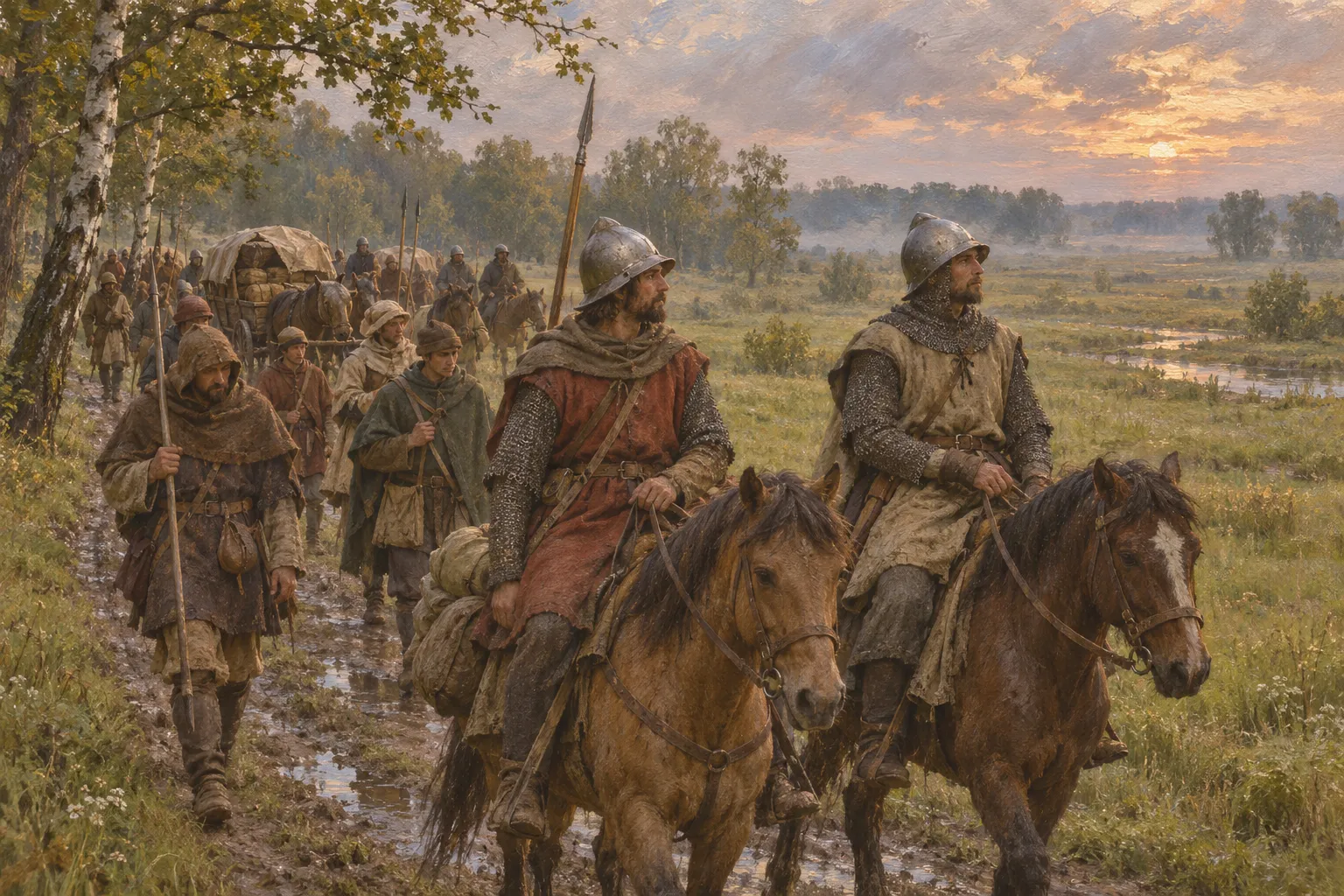
On 15 July 1410, allied armies under Jogaila and Vytautas defeated the Teutonic Order at the battle known as Žalgiris, Grunwald or Tannenberg. The battle formed part of a joint war: preparation, the joining of armies and relations with allies mattered alongside the day of fighting itself. S6
Disputes over Žemaitija continued after the victory, bringing further warfare and negotiations. The Peace of Melno in 1422 confirmed Žemaitija’s place within Lithuania. In Šapoka’s edited account, the battle and the political settlements that established borders belong to a longer story. S6
Based on: S6
2.7
Towns, crafts and different rights
The state’s history was shaped by town communities, crafts and trade as well as by rulers.
Towns granted Magdeburg rights could have their own institutions of government and justice. Šapoka’s edited history also describes guilds: organisations of particular crafts that regulated their members’ work. A town was both a place to live and a community bound by specific rights and obligations. S6
These rights did not benefit everyone equally. Nobles, townspeople and peasants held different positions, and privileges went to particular estates or communities. A town could grow and gain new privileges while its inhabitants’ lives followed very different paths. S6
Based on: S6
2.8
A state in writing: statutes and books
Written law and the printed book open different paths into the history of the state and its language.
The First Lithuanian Statute appeared in 1529 and the Second in 1566. Šapoka’s edited synthesis connects them with the ordering of customs, privileges and judicial practice. Both early redactions circulated in manuscript, written in the Ruthenian language of the period. Written state law and books printed in Lithuanian developed along different paths. S6
Martynas Mažvydas’s Catechism, printed in Königsberg in 1547, was the first printed book in Lithuanian. It brought together religious instruction, an introduction to reading and hymns. Published in Prussia, it shows how the world of Lithuanian writing extended beyond the Grand Duchy’s borders. S25 S6

2.9
Lublin: a new commonwealth
In 1569 the union with Poland takes a new political form, carrying Lithuania’s history into its next chapter.
War, disagreement and pressure accompanied negotiations over a closer union. Šapoka’s edited history recounts the Lithuanian delegation’s departure from Lublin and the transfer of Podlachia, Volhynia, Bratslav and Kyiv lands to the Polish Crown. Negotiations resumed later. This was no simple agreement between two rulers. S6
On 1 July 1569, the Union of Lublin joined the Kingdom of Poland and the Grand Duchy in the Polish–Lithuanian Commonwealth. A shared ruler and parliament coexisted with separate legal and administrative structures. The Grand Duchy’s history continued within a new political union. S26 S6