1.1
One entry, many questions
Lithuania’s name was recorded in 1009. The entry does not date the state’s foundation.
The Quedlinburg Annals’ entry for 1009 places Bruno’s death on the border of Lithuania and Rus’. It is a brief external witness, not an account of Lithuania’s rulers or boundaries. S27
Other accounts associated with Bruno’s mission mention a local ruler, Netimeras, baptism and resistance to the missionary. Beresnevičius examines them as sources for religious history. These are fuller narratives than the brief annal entry, but their details do not by themselves make Netimeras king of all Lithuania. S12
The 1936 historical synthesis places Bruno’s death in Yotvingian territory. That is a later author’s geographical interpretation. Even read together, the accounts do not pinpoint the mission’s location on a modern map. S6
1.2
Life between the scattered records
Different kinds of evidence tell us about the next two centuries, each revealing another part of life.
After 1009, reports about Lithuania remain scattered. Šapoka’s edited synthesis pieces together early history from neighbours’ reports and a broader interpretation of political change. Yet neither a continuous list of rulers nor a year-by-year account is possible. For some decades, we lack reliable information about who held power. S6
Graves, weapons, ornaments and crafted objects reveal another side of this world. Gimbutienė uses them to examine differences of wealth and ties between communities. The finds do not name rulers, however, and a rich burial alone cannot prove that a unified state already existed. S11
1.3
People’s labour and the resources of power
Behind the chronicles’ wars lay livelihoods, crafts and community resources.
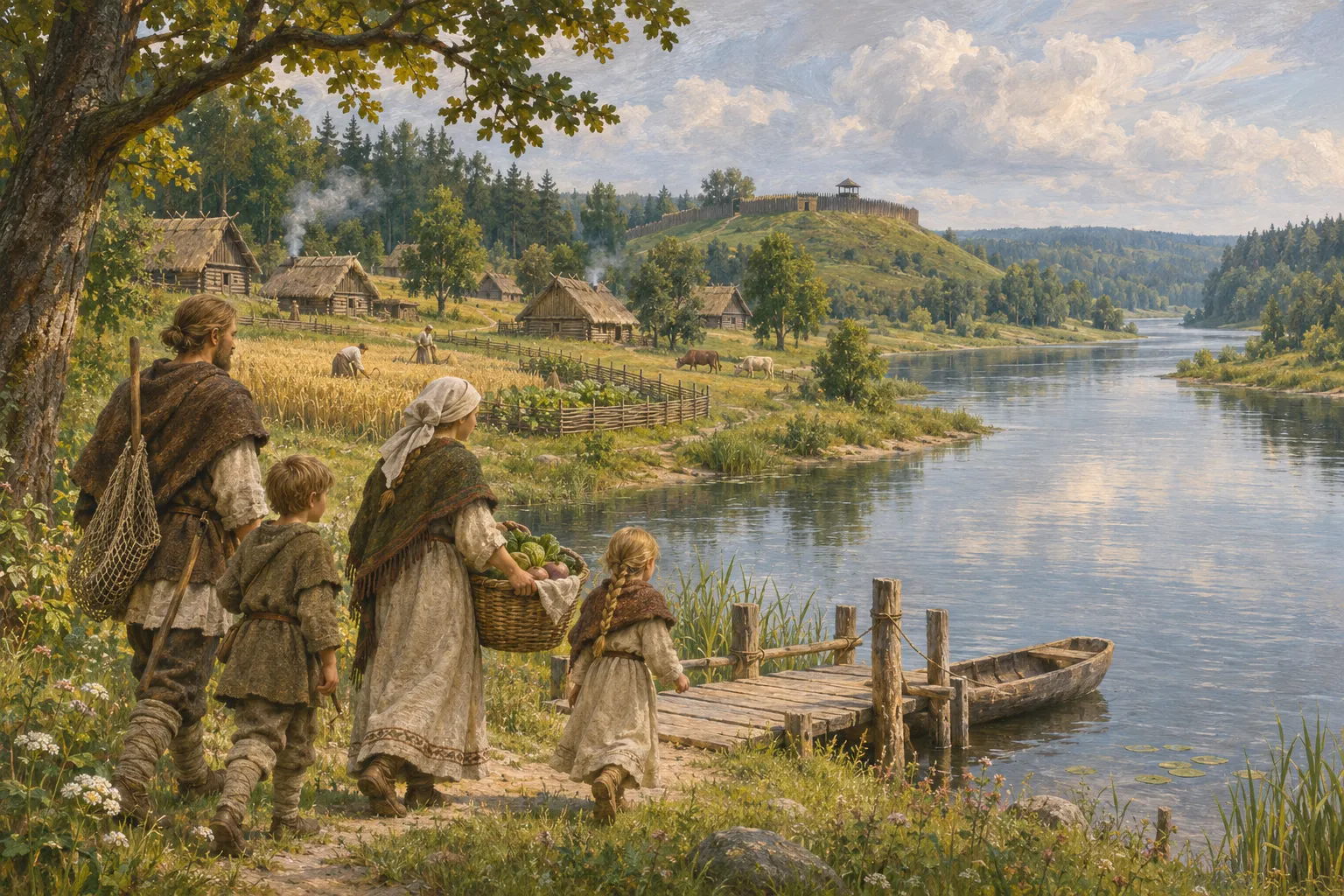
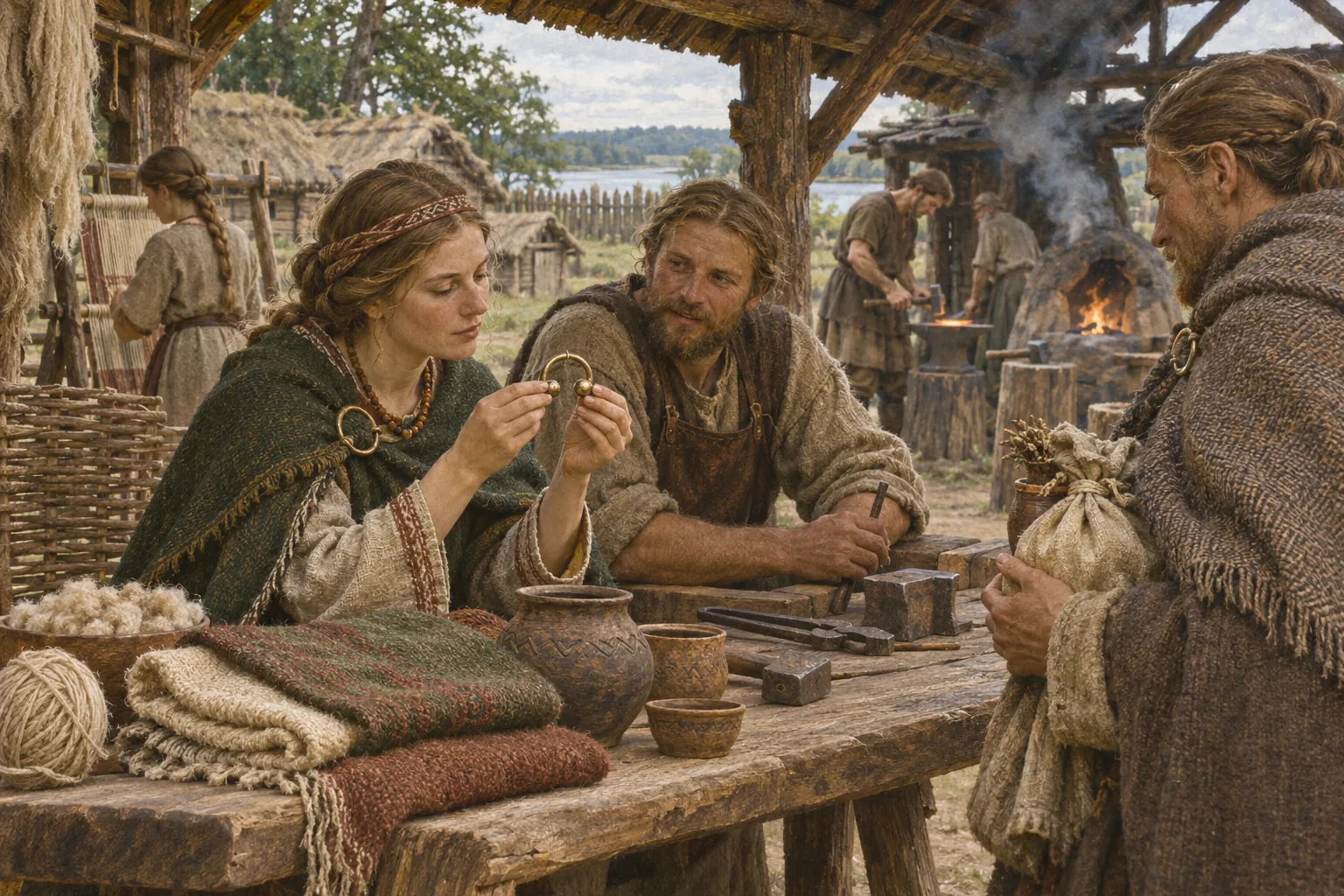
Alongside weapons, the later Baltic material culture described by Gimbutienė reveals the lives of farmers and craftspeople. Imported objects appear among local products, and some workshops are associated with fortified centres. These finds come from different Baltic lands: putting them all in one household would create a supposedly typical Lithuania. S11
Raising a rampart, digging a ditch or building timber defences required people to work together. Gimbutienė relates these undertakings to social organisation and differences of wealth. They help us understand dependence and authority, without proving that every land was organised in the same way. S11
Objects preserved in rich graves tell us much about their owners’ standing. The experience of the poorest inhabitants is harder to see. Alongside the story of dukes and costly swords ran the daily life of communities, much of which remains less familiar to us. S11
Based on: S11
1.4
Lands, leaders and growing power
In the sources, the state takes shape through a long concentration of power.
The 1936 synthesis begins with smaller local groupings and their leaders. Through joint expeditions, a commander could gain more followers and booty, then retain influence between wars. This is the author’s explanation of how power gathered; we have no surviving agreement among all the early dukes to confirm it. S6
Kinship helped transmit power and assemble allies, but did not remove rivalry between families or within them. Mindaugas’s later struggles with relatives show that joining an expedition and accepting one ruler’s supremacy were different things. S6
Based on: S6
1.5
Wars and agreements with Rus’
Relations with neighbours extended beyond a single frontier or permanent enemy.
In Šapoka’s edited history, princes of Rus’ campaign into Baltic lands during the eleventh and twelfth centuries; later in the twelfth century, Lithuanian attacks become more active. The synthesis explains warfare as both defence and a way to seize resources and strengthen leaders’ positions. S6
Chronicle extracts preserve a few episodes of warfare. Yaroslav campaigned against Lithuania in 1040; during Mstislav’s campaign in 1132, Lithuanians attacked Kyivan troops returning separately. The Novgorod First Chronicle records fighting between Lithuanians and Pskovians in 1183. These notices document clashes, but do not describe the whole political system. S31
The principalities of Rus’ did not form one unchanging political force, and their relations with Lithuanian dukes shifted. Some were opponents in war, others partners in negotiation. The agreement with Volhynia in 1219 offers a clear example of this diplomacy. S6
1.6
New powers in the north
Trade and missions were joined by new military and ecclesiastical institutions.
In the late twelfth century, merchants and missionaries arriving from the west became more active around the lower Daugava. Riga was founded in 1201 and the Swordbrothers’ Order in 1202. These developments changed the position of Livs, Latgalians and other regional communities, as well as Lithuanian dukes’ opportunities to act in the north. S6
The bishop, military order and townspeople shared concerns, but their aims did not always coincide. The 1936 synthesis describes disputes among them as well. The opposing sides had divisions of their own, so their relations cannot be reduced to an uninterrupted war between two united camps. S6
The spread of Christianity went hand in hand with castle building, territorial rule and military expeditions. Taking part in a conflict does not tell us what each person believed or what every community chose. In examining religious sources, Beresnevičius also draws attention to the perspectives of the Christian writers who recorded them. S6 S12
1.7
Žvelgaitis and Dangerutis
Early-thirteenth-century records reveal independent actors in warfare and diplomacy.
In 1205, Žvelgaitis took part in a campaign into Estonian lands. He died when Semigallian and Riga forces attacked the returning Lithuanians. Baltic communities could find themselves on opposing sides, and a leader’s power did not guarantee a safe return. S32
Dangerutis, also called Daugerutis, is associated with dynastic ties to Jersika and an agreement with Novgorod. The Swordbrothers captured him on his return from Novgorod; in 1213 he died in captivity at Cēsis. These connections reveal a wider political network operating before Mindaugas. S33
1.8
Dukes reach an agreement with Volhynia
The record of 1219 reveals hierarchy and collective action among dukes.
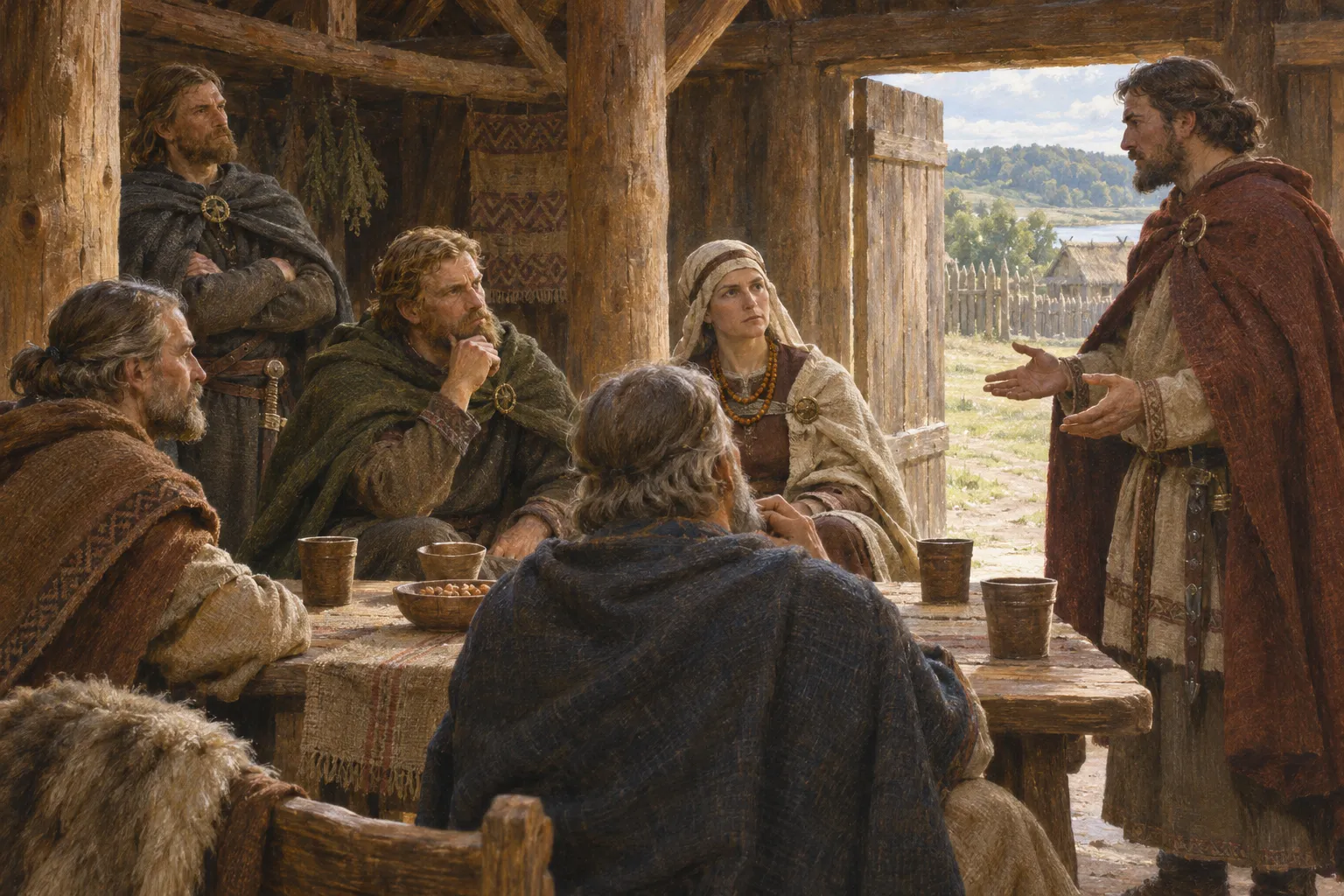
The chronicle tradition of Volhynia distinguishes five senior dukes in the agreement of 1219: Živinbudas, Daujotas, Dausprungas, Mindaugas and Viligaila. Mindaugas already belongs to the leading group, but the entry does not present him as Lithuania’s sole ruler. S28
Dubonis sees hierarchical collective rule in this list, while the 1936 synthesis stresses concentration among families. Five senior dukes do not necessarily mean five families. S28 S6
In the synthesis’s account, peace with Volhynia could free more resources for action in the north. It describes joint Lithuanian and Novgorodian action against Livonian forces, as well as difficulties in taking fortified castles. The dukes could act together while retaining their independence. S6
1.9
Mindaugas seeks supremacy
A ruler capable of subordinating rivals emerged from a network of dukes.
In the 1936 history, Mindaugas gains strength by removing or expelling other dukes and making them dependent rulers. Force and kinship both helped concentrate power. The benefits and costs differed between participants: this was more than a peaceful agreement among communities. S6
Who was Mindaugas’s father, and where were his original lands? The same synthesis acknowledges that neither is securely known. His early biography still has gaps that a smooth narrative should not conceal. S6
Based on: S6
1.10
The crown still lay ahead
In the 1230s, the story moves into the age of Mindaugas, though we have no exact date for his accession.
The 1936 synthesis places the concentration of Lithuania under one ruler before 1236, while acknowledging that the exact date is unknown. A single birthday of the state could not capture this process. The name recorded in 1009, the agreement of 1219 and Mindaugas’s supremacy are different landmarks. S6
The battle of Saulė in 1236 and the incorporation of the surviving Swordbrothers into the Teutonic Order in 1237 changed the northern political setting. Mindaugas operated among regional dukes, rulers of Rus’ and new Livonian institutions. His baptism, crown and death belong to the next, separate account. S6
Based on: S6