1.1
A hillfort near Tverai and its stories.
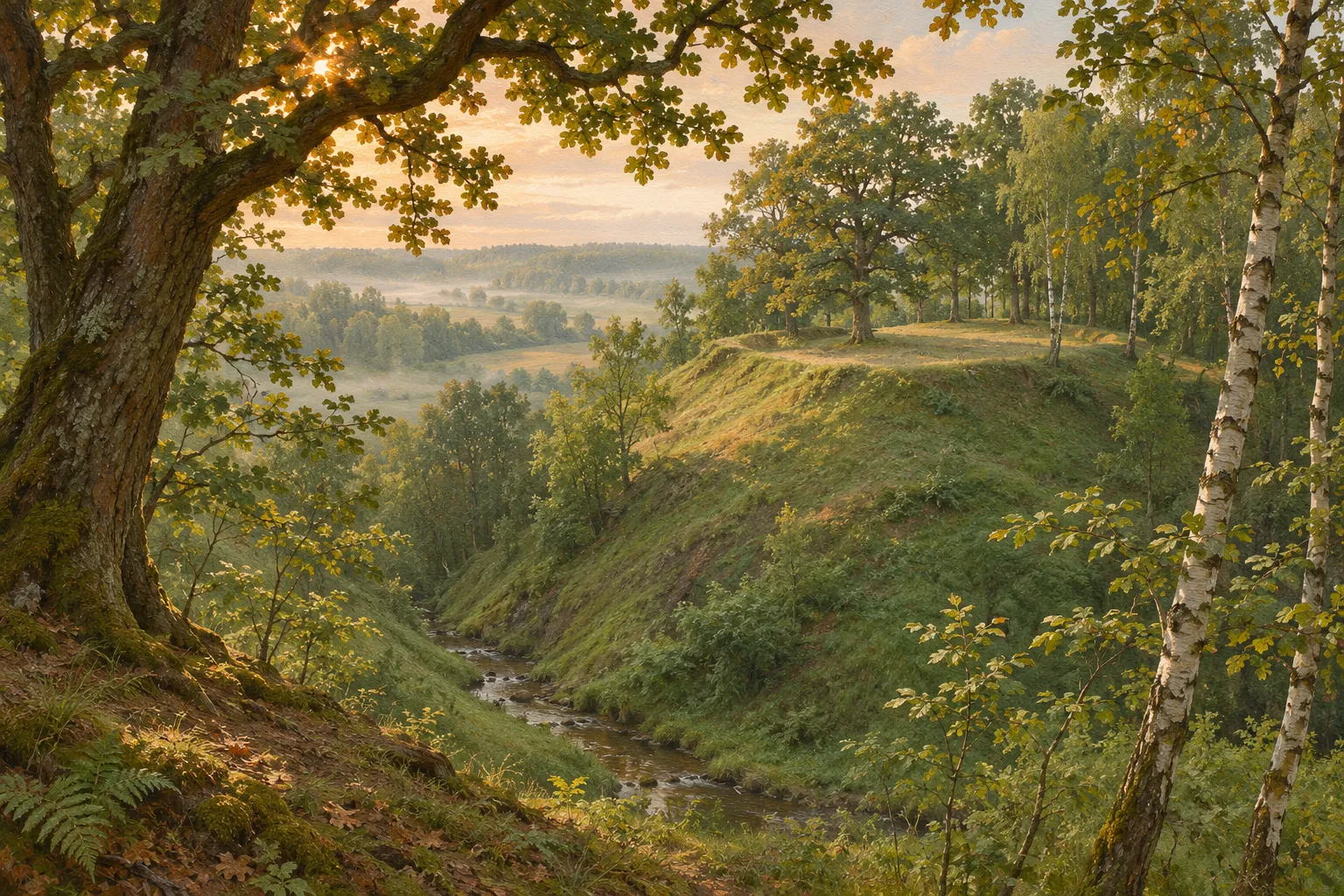
Lopaičiai is a hillfort and a wider landscape shaped by stories near Tverai.
Lopaičiai hillfort is in Samogitia, in Tverai eldership, Rietavas municipality, near Tverai. The encyclopedia also records the names Leibiškė and Tverai hillfort. S61
The wider ethnomythological complex includes the hillfort, spring, mythological stones and other objects associated with belief. The term describes the whole landscape around which the stories have grown, rather than just the archaeological hill. S61
Based on: S61
1.2
A small summit above a steep valley.
Steep slopes and a rampart show how the hill was adapted for defence.
At the top is a platform approximately 25 × 13 metres across, according to the hillfort catalogue. A curved rampart runs along its northern and western sides. The steepest slopes reach 27 metres: the earthwork is small, but the terrain is pronounced. S55
The platform’s eastern edge has slipped towards the Aitra. The catalogue identifies a settlement at the foot of the hill to the north. Human work and later changes in the landscape shaped the hill as it appears today. S55
1.3
What remains of life on the hill?
Soil layers, pieces of clay and potsherds preserve traces of life.
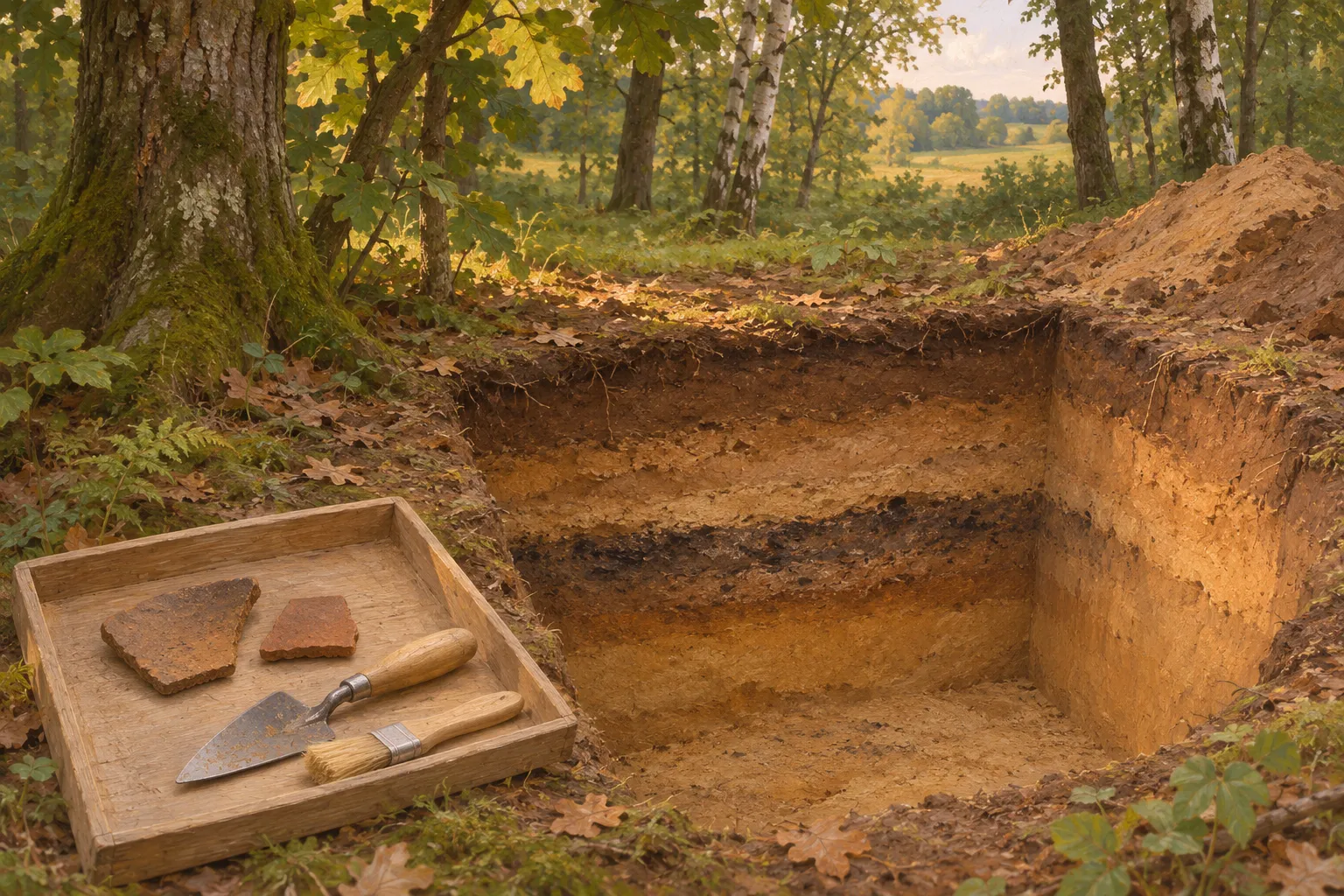
In 2004, Olegas Fediajevas surveyed 440 m² at Lopaičiai, according to the investigation summary. Near the upper part of the southern steps leading to the summit, investigators found a cultural layer, pieces of clay daub and several handmade potsherds. S60
These are surviving traces of human activity in the particular area surveyed. They cannot by themselves provide a complete building plan, identify its owner or reconstruct the castle’s appearance. S60
Based on: S60
1.4
A fresh look at an old hill.
The 2024 work added evidence and raised questions of dating.
Milda Jurgauskaitė reports 24 test pits covering 29.5 m² and approximately 216 m² of survey. The report interprets stone structures as possible reinforcement for the rampart. Two charcoal samples were dated to AD 78–230 and AD 30–213. S53
These dates concern the samples, rather than the founding of the whole hillfort or a castle’s destruction. The report also includes pottery from later periods. Establishing the site’s chronology requires comparing different finds and the layers in which they were found. S53
Based on: S53
1.5
Why does the name Vykintas keep returning?
Lopaičiai’s stories intersect with thirteenth-century struggles for power.
Mindaugas’s nephews Tautvilas and Erdvilas and their uncle Vykintas enter a conflict with the ruler. So tells the 1936 history edited by Šapoka, in which Vykintas emerges as an important rival to Mindaugas. Kinship, ambitions for power and support from neighbouring rulers intertwine in the struggle. S6
In the book, Samogitians, Yotvingians, Prince Daniel of Volhynia and the Livonian Order gather against Mindaugas. His baptism and agreement with the Order later change the alliances. This wider conflict explains why the search for Vykintas’s castle matters beyond local history. S6
Where does Lopaičiai fit into this story? The book provides historical context, but does not identify the particular hill. Connecting Vykintas’s name with a place in the landscape requires a separate examination of the evidence for his castle’s location. S6
Based on: S6
1.6
Is Lopaičiai the site of Vykintas’s castle?
Vykintas’s castle has been associated with Lopaičiai, but its location remains unconfirmed.
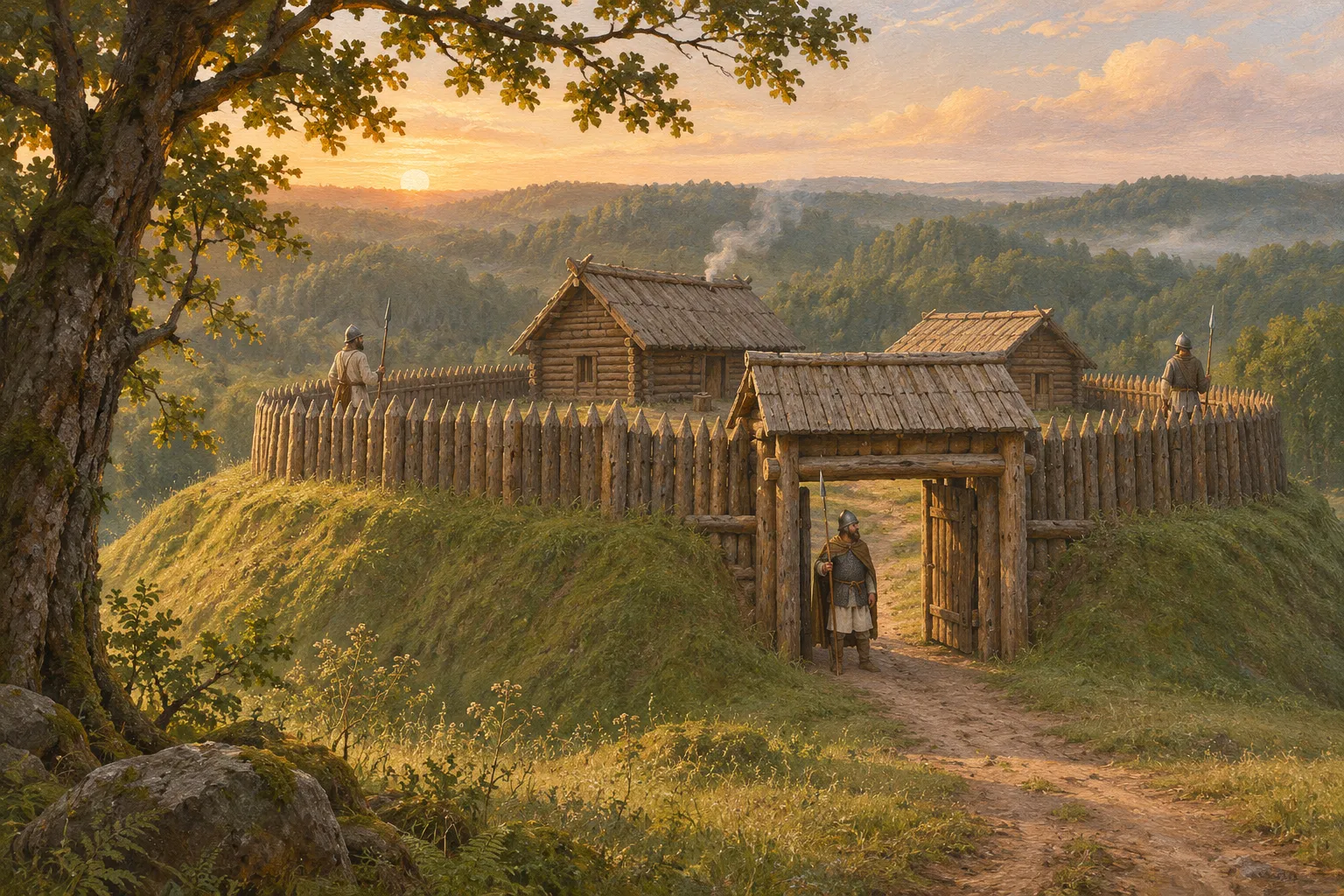
Lopaičiai has been proposed as the site of Vykintas’s Tviremet castle. Daugirdaitė discusses the difficulties with this identification and notes that other locations have been proposed. S54
In Šapoka’s book, Vykintas is defeated and killed near Tverai. That is the work’s account. An association with the Tverai area alone cannot identify the owner of a particular stronghold or supply a battle plan. The small timber castle in the illustration is also hypothetical. S6
1.7
How does a landscape become sacred?
The background of older beliefs helps frame questions about Lopaičiai.
A grove, hill or body of water may become a revered place, where prohibitions and respect shape human conduct. Beresnevičius explores such sacredness in Baltic religious narratives and historical accounts. It helps explain why landscapes inspire religious stories. S12
Rietavas’s tourism account associates the stones with possible ritual places and a so-called observatory. It also states that these hypotheses remain unconfirmed. Alongside the stones, visitors encounter the history of how they have been interpreted. S56
1.8
Water given meaning.
The spring’s attraction joins an encounter with nature to belief.
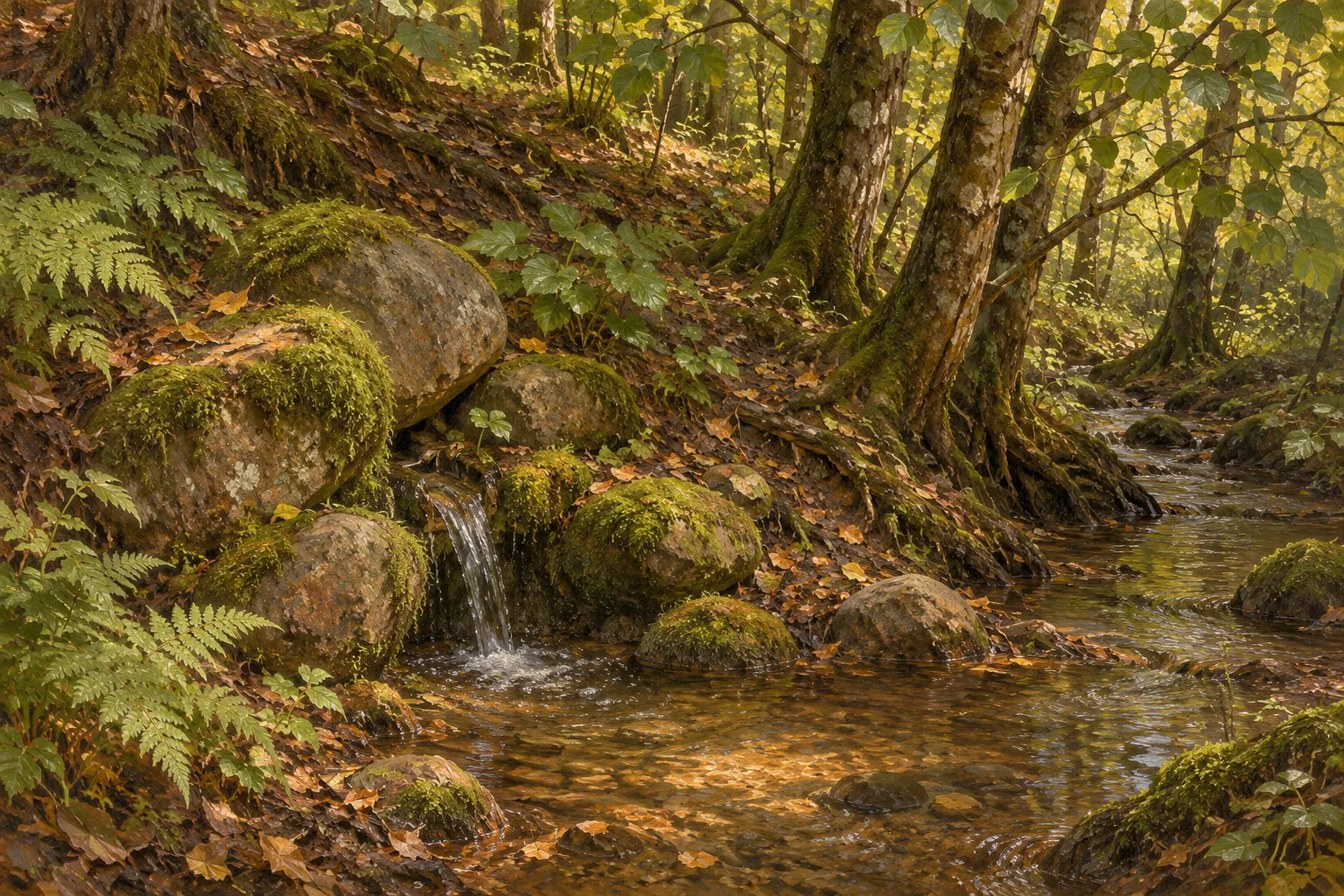
The tourism account attributes special properties to the spring water. This is presented as local belief, rather than scientific assessment of its effects. S56
A stream begins at a spring. Beresnevičius explains how such a place of origin acquires sacred meaning and contributes to water’s symbolism. This is a broader interpretation, rather than proof of particular ancient ceremonies at Lopaičiai’s spring. Different testimonies illuminate the connections between nature, belief and local history. S12
1.9
Swedish gold and the journeys of stones.
Recorded accounts preserve different memories of the place.
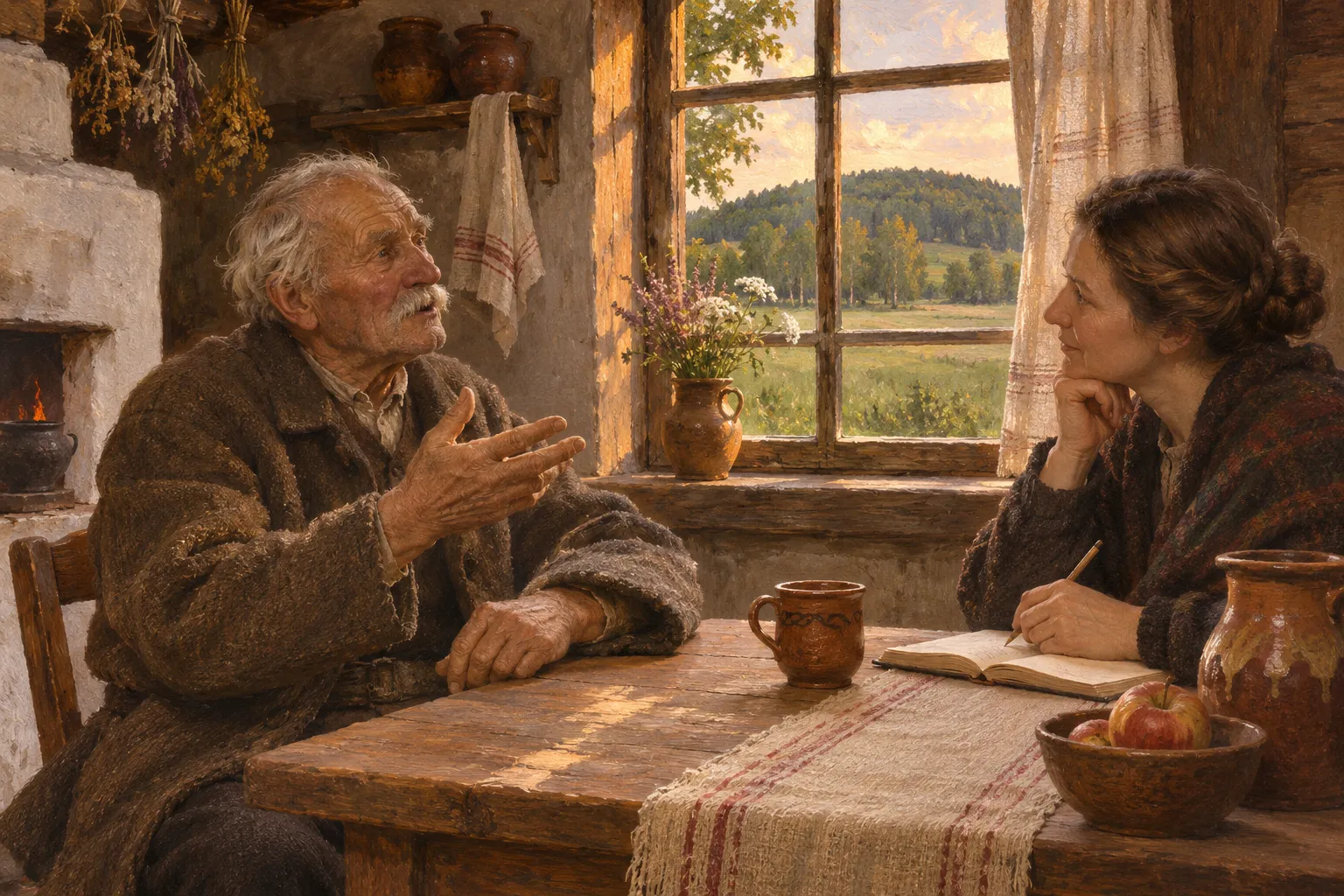
Three barrels of Swedish gold lie hidden in the hill, according to a story recorded in 2011 and published by Daugirdaitė. This is the narrator’s treasure; the publication does not report a discovery of gold. S58
In the same publication, people recall some stones being brought from fields during the collective-farm period. These accounts add to the sacred-site stories, but concern some stones rather than the entire complex. S58
Based on: S58
1.10
Lopaičiai’s history continues today.
The place also has a history of its modern prominence.
In the early twenty-first century, new meanings began to be attached to Lopaičiai. Daugirdaitė studies local enthusiasts, press accounts, the search for Samogitian identity and interviews from 2011. Her work also shows how stories change what people notice in a landscape. S54
In the religious narratives examined by Beresnevičius, surroundings mean more than their physical surface. That idea also helps us approach Lopaičiai. Who is telling a story, when were their words recorded and what meaning do they give the place? S12
1.11
What does heritage recognition tell us?
Archaeological and mythological significance can be recognised together.
On 11 February 2026, an assessment council of the Department of Cultural Heritage (KPD) resolved to add mythological significance to the recognised values of Lopaičiai hillfort. The records for Lopaičiai’s stone with a flat-bottomed bowl were also revised separately. They are two distinct heritage objects. S57
The decision recognises the importance of the place’s mythological heritage. It does not locate Vykintas’s castle or turn stories into archaeological discoveries. S57
Based on: S57
1.12
Walk the path through layers of time.
Today’s walking route connects different experiences of the place.
Rietavas’s tourism centre describes an approximately 2.1 km nature trail through this hilly complex. S56
A municipal project plans further visitor infrastructure at Lopaičiai. The contract was signed on 22 December 2025, with completion scheduled for 31 December 2027. These are published plans and dates; they do not confirm that all the work is complete. S59