2.1
Who would inherit Vytautas’s throne?
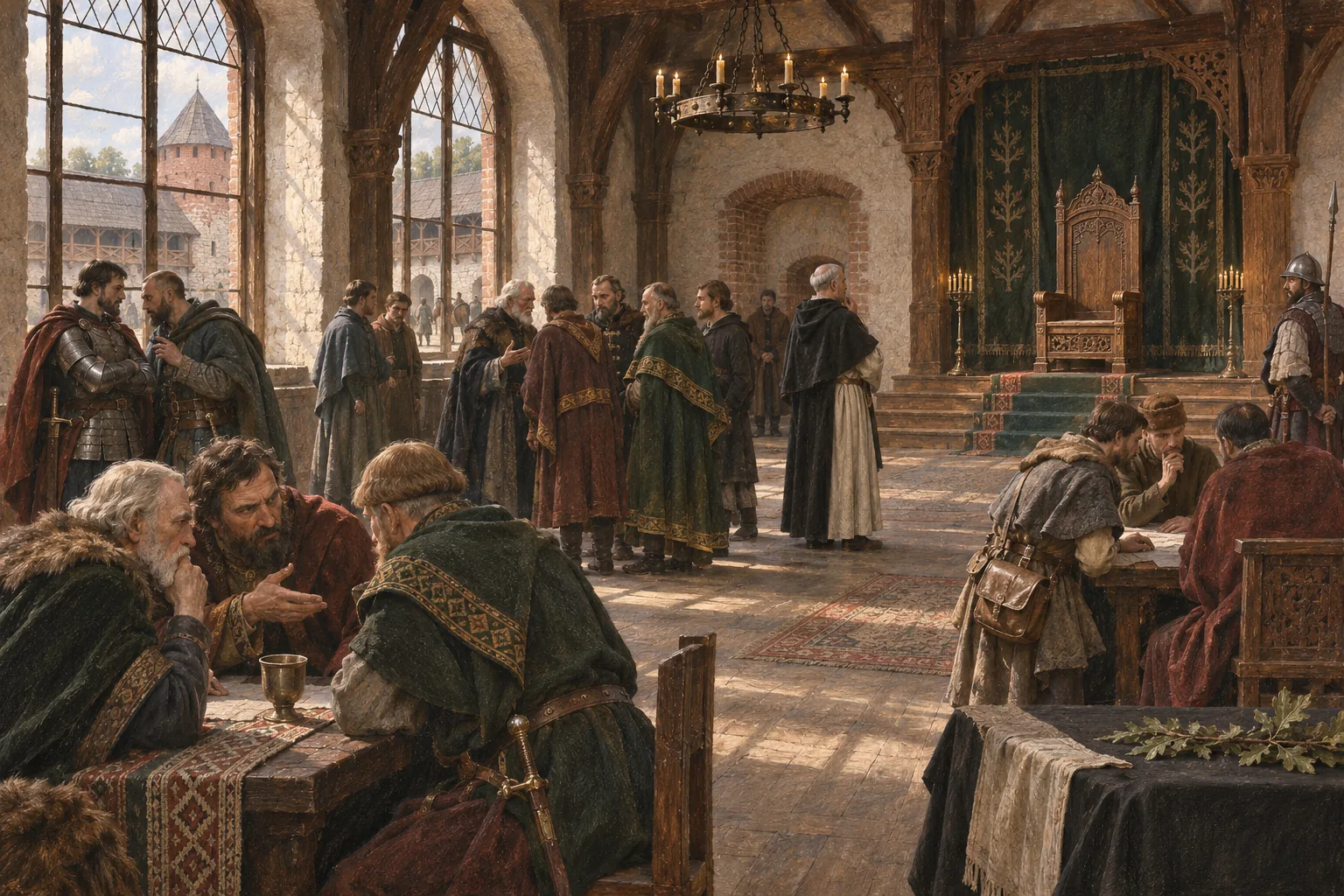
When Vytautas died in 1430, Jogaila’s brother Švitrigaila took the throne. The accounts agree on the successor but differ over who brought him to power.
The collective history edited by Adolfas Šapoka in 1936 gives the initiative to Lithuania’s nobles. Jogaila, then visiting Lithuania, had to accept their decision. In this account, choosing a ruler expressed the will of the local political community. S6
In the Bychowiec Chronicle, Jogaila himself asks the princes and lords to accept his brother. Kojelavičius also emphasizes the king’s backing. Rimantas Jasas, editor of the chronicle’s 1971 edition, leaves the initiative uncertain: did Jogaila propose the choice or acknowledge it? The same succession carries different meanings. S7 S19
2.2
An old rival reaches the throne
Years of conflict with Vytautas, failed bids for power and repeated returns lay behind Švitrigaila’s accession. He was already a familiar figure in Lithuanian politics.
Šapoka’s edited volume recalls Švitrigaila’s earlier attempts to gain Lithuania’s throne. He had sought help abroad and appealed to the Order. He also endured captivity under Vytautas. The book portrays his later residence in Chernihiv as a quieter interval before Vytautas’s death reopened the way to power. S6
Kojelavičius draws a portrait of generosity joined to a volatile temper. This seventeenth-century moral judgment colours his account of Švitrigaila’s decisions. His descriptions of the ruler’s Ruthenian associates, however, leave Švitrigaila’s own religious confession unestablished. S7
2.3
Where did the right to rule come from?
The choice of a ruler left another question open: how would his authority fit with Jogaila’s claims and Lithuania’s ties to Poland?
The 1936 history makes Švitrigaila a successor to Vytautas’s pursuit of independence. It says he requested the crown promised to Vytautas. The new ruler’s ambitions thus continue the unfinished coronation dispute and its central question: who could decide Lithuania’s succession? S6
Kojelavičius puts more weight on power conferred by Jogaila and on agreements over Podolia. Jasas brings in expectations arising from the earlier Horodło settlement. Dynastic inheritance, the lords’ choice and the king’s supremacy offered different grounds for claiming the same throne. S7 S19
2.4
The castles of Podolia change hands
News of Vytautas’s death prompted action in Podolia. While the rulers disputed their rights, men on the ground took possession of castles.
In Šapoka’s edited volume, Polish actors seize the Lithuanian governor Daugirdas and occupy the castles. Jasas explains why possession was disputed: the grant of western Podolia made to Vytautas in 1411 lasted for his lifetime. His death left rival answers to the question of who should now govern Podolia. S6 S19
Jasas names Kamianets, Skala, Smotrych and Chervonohorod. These were strongholds across western Podolia, giving the dispute a much wider reach than one residence. By demanding their return, Švitrigaila sought to reverse a military situation already established. S19
The accounts give Daugirdas different fates. Kojelavičius reports his killing; the 1936 history and Jasas describe his arrest. Both tell of a governor removed by force, but his death is not a point of agreement. S6 S7 S19
2.5
Jogaila loses his freedom to leave
Švitrigaila tried to recover Podolia by preventing Jogaila from leaving Lithuania freely. His brother, the king of Poland, became a means of applying pressure.
The 1936 volume describes guards posted over Jogaila and his entourage in Vilnius. The king ordered the castles returned, but the Polish lords refused. Control over his brother did not give Švitrigaila control over those holding Podolia. S6
The Bychowiec Chronicle and Kojelavičius stage a turbulent encounter between the brothers, including beard-grabbing. Jasas distinguishes this literary scene from evidence of detention and favours house arrest over imprisonment in a dungeon. The dialogue belongs to the narrator’s account of the quarrel. S7 S19
The timing also differs. The chronicle places the quarrel after two years of Švitrigaila’s reign, whereas Jasas connects it with autumn 1430. In the latter chronology, the Podolian crisis shaped the beginning of his rule, long before the coup. S19
2.6
Allies had ambitions of their own
War with Poland required allies. Švitrigaila found some among powers that had earlier fought Vytautas.
Šapoka’s edited volume highlights the alliance made at Skirsnemunė in 1431 and contacts with Sigismund of Luxembourg. Jasas also records a mutual-aid agreement that June. Conflict with Poland gave the Order a fresh opportunity to intervene in Lithuanian affairs. S6 S19
The Prussian grand master and the Livonian master headed separate branches of the Order. Their decisions did not always coincide, and assistance did not necessarily arrive together. The 1936 history criticizes Švitrigaila for making a truce with Poland while his allies were attacking it elsewhere. S6
The 1936 book also reports a promise involving Palanga and a coastal strip. This remains that volume’s claim: without comparing the treaty text, it cannot supply a precise map of territory to be surrendered. In this account, the price of assistance touched the settlement established by the Peace of Melno. S6
2.7
1431: the road to Lutsk
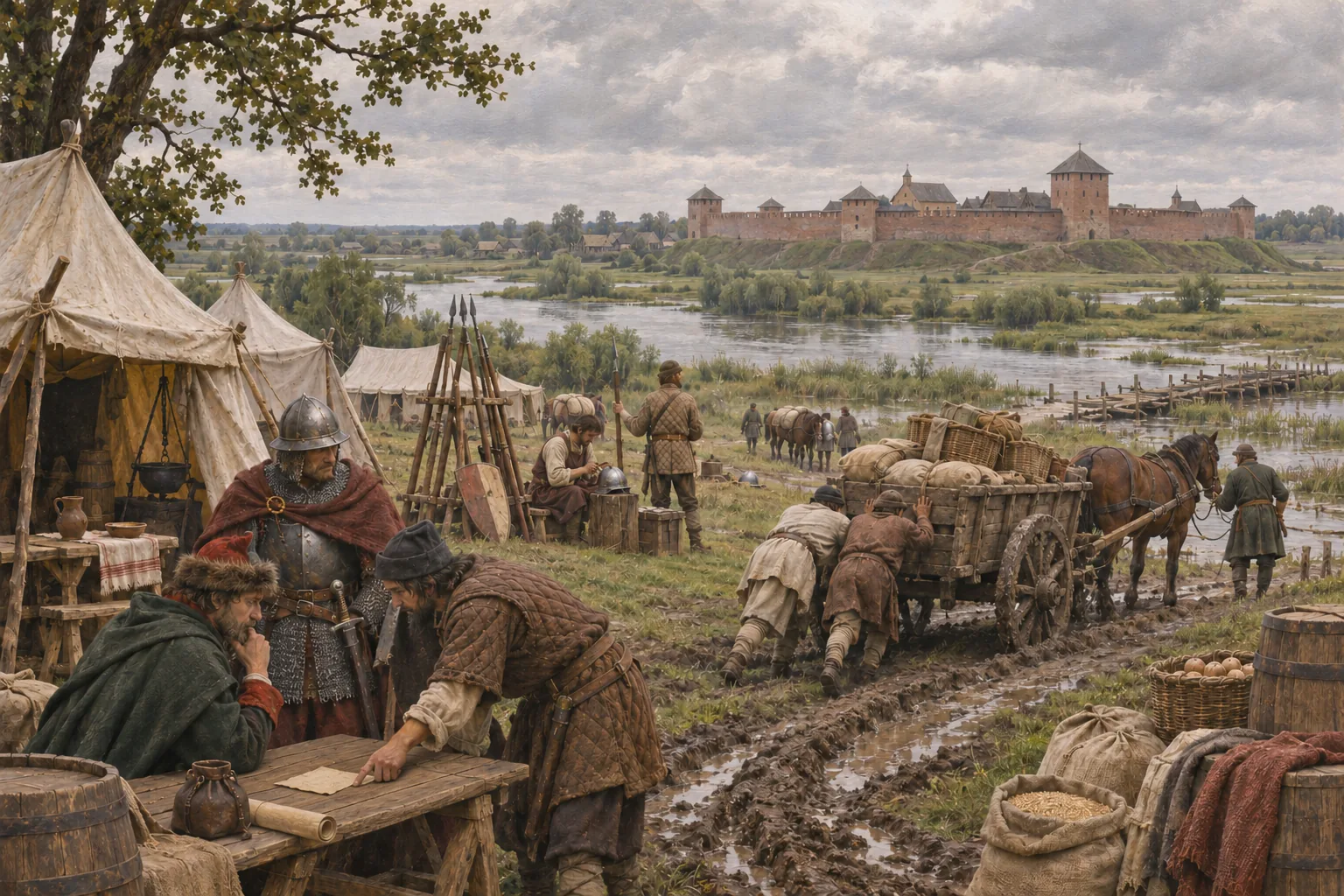
The campaign moved into Volhynia. Kojelavičius follows it towards Lutsk and the river running beside it, the Styr.
In Kojelavičius’s account, the Polish army crosses the Bug into Volhynia and advances past devastated Vladimir, today’s Volodymyr. Švitrigaila falls back towards Lutsk after unsuccessful encounters. Between the rulers’ decisions, the author repeatedly shows towns burning and countryside exposed to the armies. S7
At Lutsk, the river and demolished bridges impede the attackers. Kojelavičius describes their crossing, fighting at the banks and Švitrigaila’s withdrawal. The detailed sequence comes from his later historical narrative, rather than an independently verified account of every movement. S7
Švitrigaila leaves Jurša in command of the castle garrison. The town is lost and the field army has withdrawn, but the stronghold still obstructs the attackers. Jurša, the defenders’ endurance and the prolonged siege now take the centre of Kojelavičius’s story. S7
2.8
Lutsk castle refuses to surrender
Lutsk castle did not fall quickly. Resistance inside the walls and negotiations beyond the camp both shaped the campaign.
Kojelavičius says Jurša requested three days to discuss surrender. Inside the castle, the defenders instead repaired the walls and prepared to fight again. In this telling, their stratagem worked: the attackers faced renewed resistance in place of the capitulation they expected. S7
While the castle held, Švitrigaila sought help and negotiated, yet continued operations elsewhere. Kojelavičius brings the siege to an end through exhaustion, shortages and a truce. The 1936 history emphasizes a costly failure of coordination: his allies were fighting Poland when Švitrigaila laid down his arms. S6 S7
Territorial claims and distrust outlasted the truce. A later meeting at Parczew, described by Kojelavičius, also failed to bring a lasting agreement. The rival understandings of who had the right to rule remained unresolved. S7
2.9
Some lords turn against the ruler
Some Lithuanian lords began to organize against Švitrigaila. The books connect their discontent with personal relations and changes in the ruler’s entourage.
The 1936 history singles out Vytautas’s former associates. They resented Švitrigaila’s behaviour and the new men he had befriended in Ruthenian lands. Alongside the struggle for the throne ran another over appointments, access to the ruler and established influence. S6
Both histories acknowledge Polish involvement, but give it different weight. Šapoka’s edited volume considers whether Poland encouraged the plot and mentions Zaremba’s activity. Kojelavičius is firmer about initiative from the Polish court. The extent of that initiative remains a difference between the accounts. S6 S7
Švitrigaila’s followers did not belong to one linguistic or religious community. Kojelavičius himself later names prominent Lithuanian lords in his army. The coup cut across political and family connections, placing people of the same background on opposing sides. S7
2.10
The 1432 coup at Ashmyany
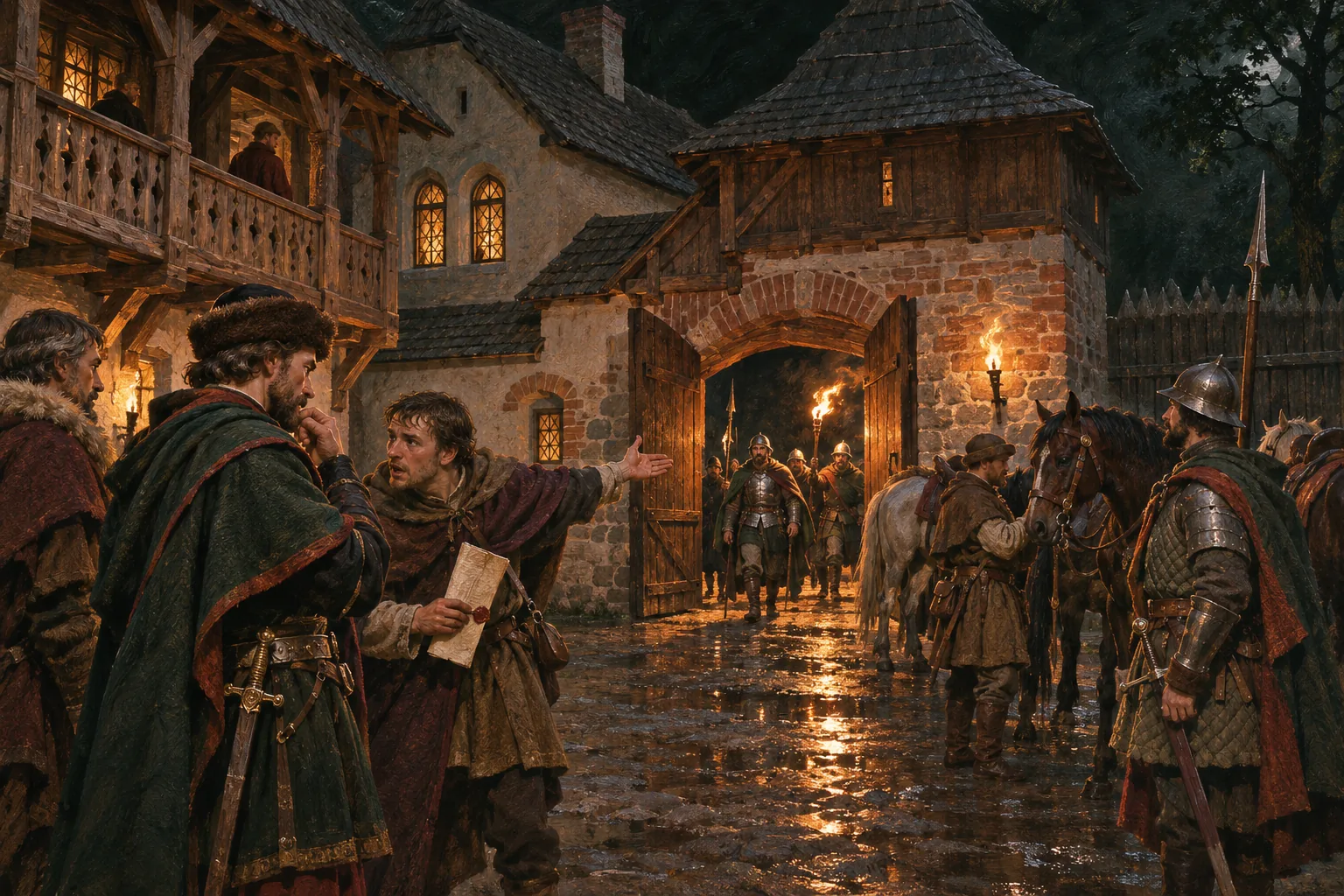
At the end of summer 1432, Švitrigaila was attacked at Ashmyany and escaped. Žygimantas Kęstutaitis took the throne, while the plotters seized the treasury and chancery.
Šapoka’s edited volume says Švitrigaila stopped overnight on his way to negotiations with Jogaila. Jasas dates the attack to the night of 1 September. His escape left two living claimants, turning his rival’s proclamation into a struggle for the whole grand duchy. S6 S19
The escape routes differ. The 1936 history sends Švitrigaila to Polotsk; Kojelavičius sends him to Smolensk and adds a warning from Jonas Manvydas. Jasas discusses the seizure of his wife, treasury and chancery. The attack transferred important means of rule, even though it failed to capture the ruler. S6 S7 S19
The Bychowiec narrator leaves out the attack and presents a more orderly change of ruler. Jasas brings the omitted violence back into view. The smooth succession belongs to the chronicle’s telling; the night-time coup emerges in the editor’s discussion of other evidence. S19
2.11
Two rulers within one state
Švitrigaila did not accept that his reign had ended. Žygimantas likewise claimed authority over the entire grand duchy.
The 1936 history places Švitrigaila’s support in Polotsk, Vitebsk, Smolensk, the Severian and Chernihiv regions and Kyiv. Žygimantas held Lithuania’s core and parts of the western and neighbouring lands. These allegiances were changeable; they did not constitute an agreed new state frontier. S6
The chronicle calls Švitrigaila an elected grand duke of Rus’. Jasas points out that he continued claiming Lithuania’s grand-ducal title, with no documented separate coronation. His eastern base supported a claim to the whole duchy, not simply acceptance of a reduced throne. S19
Both rulers had to keep seeking recognition. When a town or prince changed sides, soldiers, resources and the upkeep of garrisons were at stake. Campaigns therefore kept returning to the major towns and their strongholds. S6 S19
2.12
Promises in return for Polish help
Žygimantas Kęstutaitis’s position depended closely on Jogaila’s support. That support carried conditions concerning supremacy and succession.
Šapoka’s edited history explains the Hrodna agreements through wartime necessity. Žygimantas acknowledged Jogaila’s supremacy and promised Lithuania to the king or his heirs after his death. In the book’s interpretation, these concessions bought the Polish support he needed against Švitrigaila. S6
Jasas identifies a Hrodna ceremony on 15 October 1432. Kojelavičius instead places the installation in Vilnius and dwells on restrictions affecting the succession. Places, ceremonies and promises vary across the accounts; they do not offer a single matching description of one instrument. S7 S19
For Žygimantas’s son Mykolas, the crucial issue was whether his father’s authority could become hereditary. The 1936 history also links that question to later conflicts. Mykolas Žygimantaitis appears here as a commander and prospective successor, distinct from Švitrigaila’s supporter Žygimantas Kaributaitis. S6 S7
2.13
Noble rights become a political question
A ruler needed nobles’ trust and their soldiers. Protection of their rights offered one way to broaden his support.
The 1936 history connects the privilege of 1434 with Žygimantas’s effort to attract nobles. It singles out judicial protection against arrest and wider rights for Orthodox nobles, while recording a continuing restriction on high office. A single privilege left other legal distinctions in place. S6
Legal historian Antanas Šenavičius discusses acts issued at Hrodna on 15 October 1432 and Trakai on 6 May 1434. Their provisions concern nobles’ hereditary property and personal protection, rather than equality for all inhabitants. S148
Kojelavičius approaches privileges through Eastern-rite Christians obedient to Rome, giving the subject a confessional frame. The expansion of noble rights and efforts at church union could intersect in a ruler’s policy. They remained distinct questions, each narrower than religious freedom for the whole population. S7
2.14
Armies meet at Ashmyany
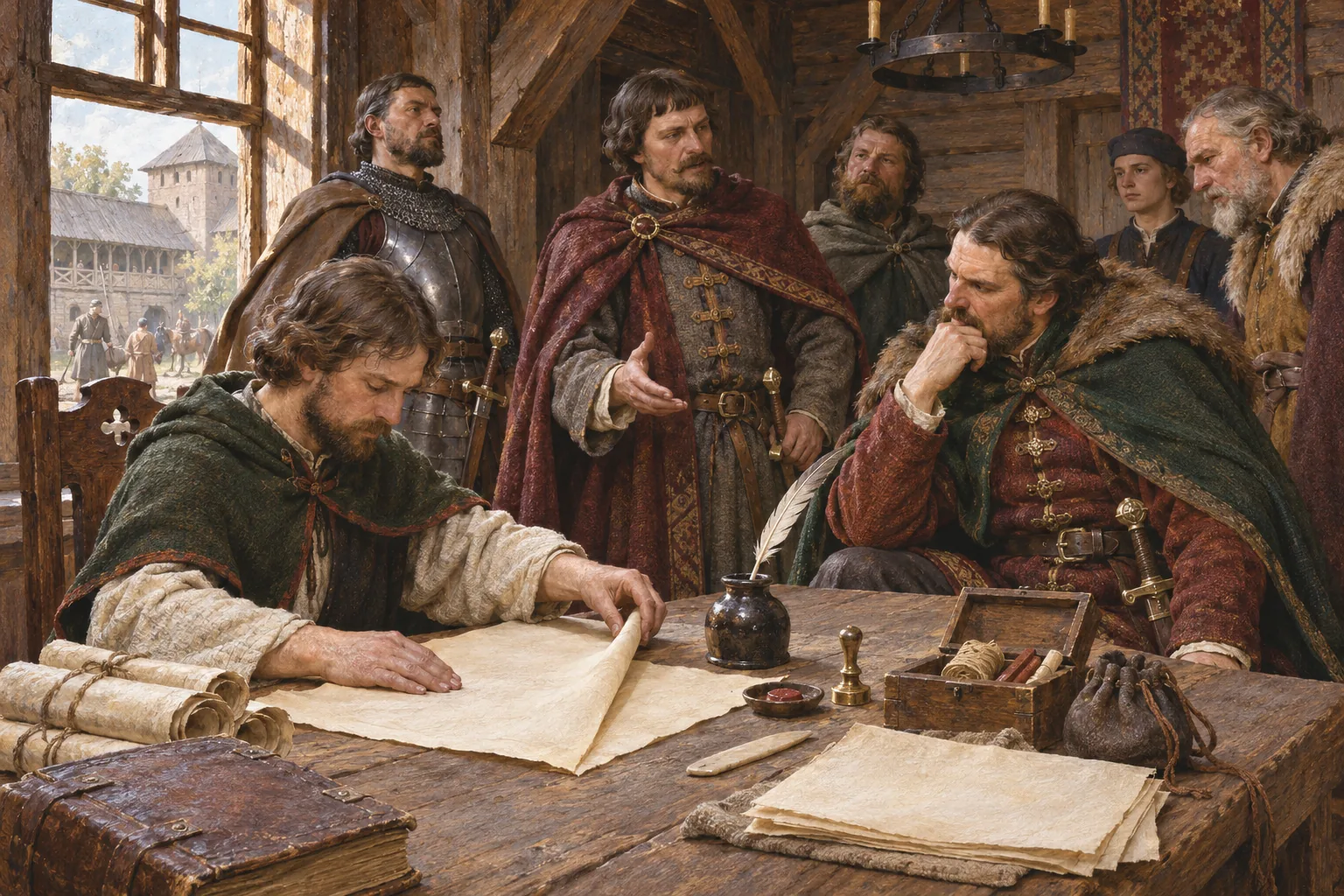
After the coup, Ashmyany became a place of combat again. The December battle was an open attempt to reverse the balance of power.
The Bychowiec Chronicle gives 8 December 1432 for the battle and describes Žygimantas’s victory and his prisoners. Kojelavičius gives 2 December. Both accounts concern the later clash of armies, separate from the night-time attack that had displaced Švitrigaila. S7 S19
The defeat frustrated Švitrigaila’s hope of quickly recovering power. The large army and casualty figures in Kojelavičius remain his estimates. Jasas observes that other copies omit some of the chronicle’s numbers, making the apparent scale of the battle partly a question of textual transmission. S7 S19
2.15
Campaigns without a decisive victory
In 1433, campaigning spread across towns and routes held by both claimants. It exhausted the country without ending their rivalry.
The Bychowiec narrator follows Švitrigaila through Rudamina, the Trakai area and eastwards, recording fires, clashes and prisoners. An army could leave major castles unconquered while still threatening the settlements along its path. S19
Jasas separates poorly coordinated winter fighting from the summer and autumn campaign. Kreva, Maladzyechna, Kopachi, Zaslawye and Minsk extend the geography of the chronicle’s war. The accounts differ over the sequence, leaving no single securely established campaign route. S19
At Mstislavl, the disagreement is stark. The chronicle’s siege fails; in Kojelavičius, prolonged resistance ends with the town’s capture. The same centre of fighting produces opposite answers to the question of whether its defenders held out. S7 S19
2.16
1434: rain and help that did not arrive
The enemy was not the only obstacle. The chronicle and Kojelavičius describe rain, wetlands and the failure of allies to act together.
In the Bychowiec Chronicle, heavy rain stops forces gathered near Braslaw. Kojelavičius also tells of water and difficult ground obstructing the campaign. The chronicler reads divine favour into the weather, making the same episode both a military obstacle and a sign of God’s support. S7 S19
Jogaila died in 1434 and his son Władysław inherited Poland’s throne. Švitrigaila lost his brother, but the Lithuanian struggle continued and Žygimantas still needed Polish support. By the approach to Pabaiskas, that assistance came from another generation of the dynasty. S6
2.17
The ruler turns his suspicion on Herasimas
The death of Metropolitan Herasimas reveals the close entanglement of faith, political authority and loyalty.
The 1936 history links Herasimas with church union and Švitrigaila’s diplomatic ambitions. It explains the ruler’s suspicions through a Smolensk conspiracy allegedly encouraged by Bishop Motiejus of Vilnius. This sequence of motives belongs to the book’s interpretation; the secret negotiations have not been independently verified here. S6
The Bychowiec Chronicle briefly reports that Herasimas was burned at Vitebsk. Jasas dates his arrest to March 1435 and execution to 26 July. On Švitrigaila’s orders, a metropolitan died within the eastern political world where the ruler himself sought his strongest support. S19
In Kojelavičius’s account, the episode appears under a marginal date of 1433. He depicts Herasimas, whom he calls Gerasimas, through hostile Catholic polemic. His date and judgment differ from Jasas’s commentary. The death cannot be reduced to personal distrust, or used to make the entire war a contest between two faiths. S7 S19
2.18
The coalition approaches Ukmergė
In 1435 Švitrigaila assembled another coalition. The Livonian army became a major force in his campaign.
The 1936 history lists the Livonian Order, Tatars and Ruthenian princes among Švitrigaila’s supporters. The Bychowiec Chronicle describes assembly towards Vitebsk and Braslaw, followed by a march towards Ukmergė. Jasas cautions that the precise day when the allies joined is uncertain. S6 S19
Kojelavičius adds troops from Bohemia and Silesia. His numbers and descriptions of contingents belong to a later military reconstruction. The clearest change from earlier poorly coordinated operations is that Švitrigaila’s army and the Livonian assistance now appear as forces acting together. S7
Žygimantas also gathered help, combining Lithuanian forces with Polish soldiers. Both coalitions crossed political and confessional boundaries. Their membership fits neither a simple Lithuanian–Ruthenian divide nor a war of Catholics against Orthodox Christians. S6 S7
2.19
Disagreement over commanders and rivers
The result at Pabaiskas is clearer than the full course of the battle. The accounts differ over its commander and the river beside which it was fought.
The 1936 history and the Bychowiec Chronicle place Mykolas Žygimantaitis at the head of the Lithuanian and Polish army. Kojelavičius likewise gives him overall command, while associating the Polish contingent with Jakub of Kobylany. This narrative line places the ruler’s son prominently in the victory. S6 S7 S19
Długosz tells a different story: Žygimantas left Mykolas at Trakai and entrusted the Lithuanian army to Jakub of Kobylany. This account appears in Book XII, consulted in Karol Mecherzyński’s 1869 Polish translation. Jakub commands in this version; the ruler’s son, prominent in the other narratives, stays away from the battlefield. S140
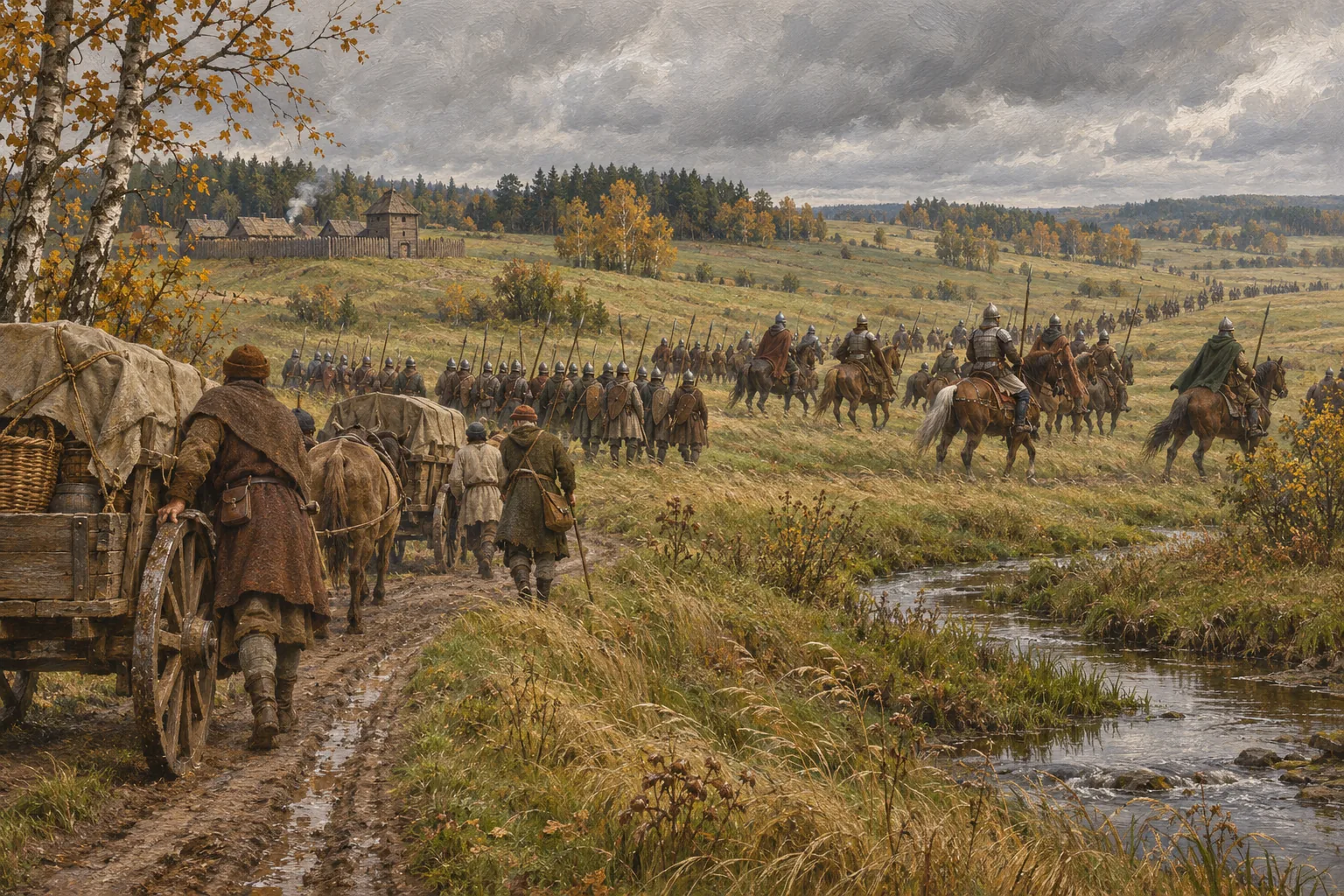
The chronicle and Kojelavičius name the Šventoji. Jasas places the fighting beside the Žirnaja near Pabaiskas, between the lake and the settlement. The illustration’s terrain and army positions are invented. S7 S19
2.20
1 September 1435
At Pabaiskas, Švitrigaila’s forces and their Livonian allies were defeated. Švitrigaila escaped, but the coalition suffered a severe blow.
The Bychowiec Chronicle gives 1 September 1435 and immediately names dead and captured princes. The 1936 history makes this Žygimantas’s decisive military victory. In their brief reports, the losses among the coalition’s leaders convey the extent of its defeat. S6 S19
Kojelavičius begins with several days of waiting and a camp move at dawn. An attack on the moving army’s rear draws in more troops until the main forces clash. This is the later historian’s explanation of how battle began, including intentions he assigns to its commanders. S7
Waiting, rain and an attack during withdrawal or repositioning also shape Długosz’s account. Defeat leads into pursuit and drowning. The related narrative details remain part of these tellings, with their independence from one another uncertain. S140 S7
2.21
Commanders and princes are lost
The coalition lost important commanders and princes. Accounts differ over who fell in the fighting and who died in captivity afterwards.
The 1936 history and the chronicle record the Livonian master’s death; the chronicle also names the marshal. Their loss also removed men able to organize further assistance. Princes taken prisoner could no longer immediately gather their own followers to continue the struggle. S6 S19
Žygimantas Kaributaitis’s end is especially uncertain. The brief chronicle and 1936 accounts include him among the dead; Kojelavičius describes captivity and poisoning while also mentioning reports of death from wounds. He was Algirdas’s grandson who had been active in Bohemia, distinct from the victorious ruler Žygimantas Kęstutaitis. S6 S7 S19
Długosz retains several endings in one account: drowning on Žygimantas Kęstutaitis’s orders, death from wounds or poisoning during treatment. Jasas also discusses these versions. Kaributaitis’s death is clear, but the accounts leave open whether his wounds killed him or he was deliberately put to death. S140 S19
2.22
Victory does not open every gate
Pabaiskas changed the course of the war, but the towns did not all change allegiance in a single day.
After victory, the chronicle takes Mykolas to Orsha, where the people of Smolensk submit. Yet the chronicle’s sieges of Vitebsk and Polotsk fail. Success in the field had not compelled every major castle to open its gates. S19
Jasas dates Smolensk’s submission to 1435 and those of Vitebsk and Polotsk to 1436. In the south, Švitrigaila retained support longer and continued seeking an agreement with Poland. This slower sequence differs from Długosz’s picture of Ruthenian towns immediately abandoning him. S19 S7 S140
Even the loss of Volhynia is compressed differently. The 1936 history associates his expulsion with 1438; Jasas places the takeover of Lutsk in early 1439. Švitrigaila’s position was shrinking, but the end of his authority cannot be assigned one date identical with the battle. S6 S19
2.23
Peace is made at Brześć Kujawski
After Pabaiskas, the military result still had to be secured through negotiation. The peace concluded at the end of 1435 formed part of that work.
Długosz describes arduous negotiations and disagreement over recognizing Lithuania’s ruler. He places agreement at the end of the year, followed by sealing and oaths in 1436. Military victory still required promises to be negotiated and made binding. S140
The Polish archive’s description of the surviving parchment identifies a peace document dated 31 December 1435 at Brześć Kujawski, shelfmark 1011. This is Brześć in Kujawy, Poland, distinct from Brest in accounts of journeys through the Lithuanian grand duchy. S149
The 1936 history links peace with both branches of the Order withdrawing from Švitrigaila. It compares Pabaiskas with Grunwald and treats it as the end of Lithuania’s long struggle with the Order. This is the book’s broad historical assessment, rather than proof that one battle extinguished all Livonian military and political power. S6
2.24
The victor confronts the lords
Žygimantas won the war, but relations with the lords and with Poland remained strained. Succession again became a dangerous issue.
The 1936 book describes a stronger Žygimantas resisting earlier commitments to Poland and seeking relations with Albrecht. It interprets his letter asserting a right to rule as a return to independent policy. The letter itself has not been separately examined here as a diplomatic source. S6
Žygimantas sought recognition of Mykolas as his successor. Šapoka’s edited history records persecution, imprisonment and deaths, but leaves the coming conspirators’ precise aims uncertain. S6
The Bychowiec Chronicle accuses Žygimantas of planning to destroy the nobility and elevate peasants. Jasas distinguishes that extreme charge from repression and restrictions on princely power. In his reading, the allegation belongs to an aristocratic justification of assassination, rather than a securely established programme of social change. S19
2.25
1440: the ruler is assassinated
On 20 March 1440, Žygimantas Kęstutaitis was killed at Trakai. Later written accounts told the story in striking detail.
Jasas dates the killing to 20 March. The Bychowiec Chronicle links the plot to Daugirdas, Leliušas and Prince Aleksandras Čartoriskis, with Skabeika striking the blow. Kojelavičius retells the episode with a different first name for Čartoriskis. The name varies between texts; it does not identify another conspirator. S7 S19
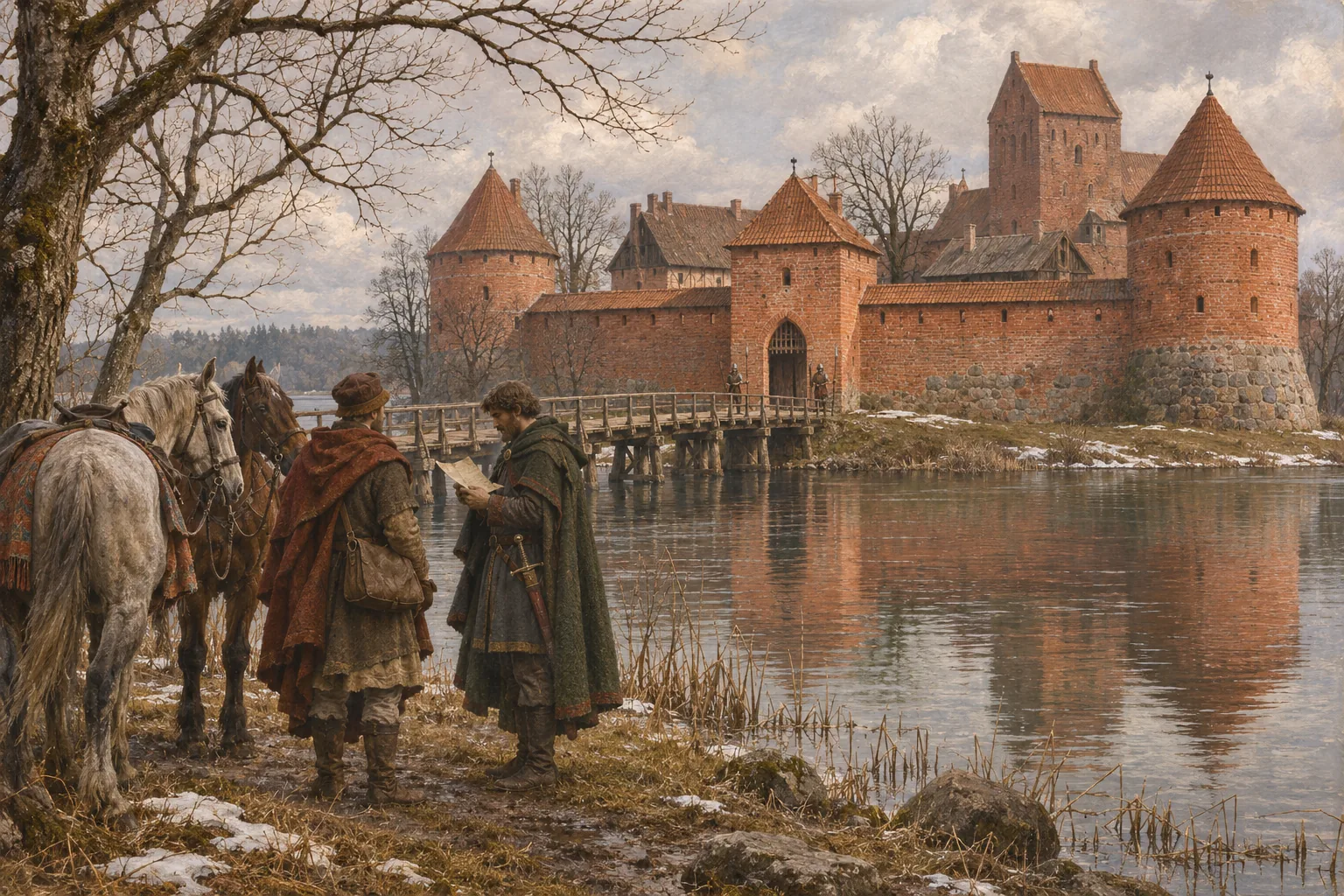
Hay wagons conceal armed men entering the castle in the chronicle. The conspirators exploit the ruler’s habit of admitting a favourite bear, and strike while Žygimantas hears Mass. These details belong to a sixteenth-century written account of the assassination, with no separate local-folklore or crime-scene evidence established here. S19
Jasas doubts the bear trick and discusses another version of the attack. In his commentary, Trakai’s greater castle means the peninsula castle, and the smaller castle the island castle. Details of the attack remain features of particular texts. S19
2.26
Kazimieras takes the throne
After Žygimantas’s death, neither Mykolas nor Švitrigaila gained the throne. The lords chose Jogaila’s young son Kazimieras.
The 1936 history links the lords’ choice with their wish to direct government and their fear that Mykolas would avenge his father. Thirteen-year-old Kazimieras continued the dynasty, with Jonas Goštautas influential around him. The book stresses the separate choice of a Lithuanian ruler, apart from Poland’s royal authority. S6
The Bychowiec Chronicle places Kazimieras’s elevation at Brest. Jasas corrects it to a formal proclamation in Vilnius on 29 June 1440. Kojelavičius also preserves two understandings of the journey: a ruler chosen by Lithuania, or a deputy sent by Poland’s king. The new reign began amid conflicting expectations. S7 S19
Švitrigaila later ruled Lutsk and Volhynia again without recovering Lithuania’s throne. Jasas rejects seven uninterrupted years of exile in the chronicle and tentatively connects his return to Lutsk with an invitation from its nobles and townspeople. He died in 1452; the 1936 history and Kojelavičius associate the future of his lands with Lithuania. Pabaiskas ended his great campaign, but he lived on. S6 S7 S19