1.1
Grove, water and hill
Daukantas’s past begins in woodland, but the uses of trees turn his account into an argument.
In his 1845 Būdas, Simonas Daukantas describes groves where breaking a green branch was forbidden. Later he disputes writers who equated protecting trees with worshipping them. Both statements belong to his account of the past; neither cancels the other. S20
Much earlier, Peter of Dusburg mentions Prussian sacred woods, fields and waters. He lists activities people supposedly dared not undertake there: cutting timber, tilling or fishing. The chronicler describes a religion he himself condemns. Daukantas is also concerned with how earlier writers understood it. S107 S20
1.2
What Prussians dared not do, according to the chronicler
In his chronicle of 1326, Dusburg singles out sacred places through the work forbidden there.
Book III, chapter 5 brings grove, field and water together. Each space has its customary work: cutting wood, cultivating land and fishing. According to Dusburg, Prussians dared not undertake these activities in sacred places. S107
Dusburg is writing here about Prussians. The paragraph does not by itself describe every Lithuanian grove or the customs of every Baltic community. Nor does it tell us what these places looked like. A wood in the text does not establish a built temple, and a fishing prohibition cannot reconstruct a waterside ceremony. S107
Based on: S107
1.3
Romow and the comparison with Rome
In the same chapter, Dusburg explains another religion through familiar comparisons from his Christian world.
Dusburg names Romow in Nadrovia and connects its name with Rome. He compares Criwe’s authority with that of the pope. The chronicler claims that Lithuanians and the peoples of Livonia also acknowledged that influence, and mentions a fire kept burning. This is the religious order as he presents it. S107
The comparisons with Rome and the pope reveal the author’s own perspective. He describes another religion as he understands it. This account establishes neither Romow’s exact position on a modern map nor an archaeologically verified religious centre for all Balts. S107
Based on: S107
1.4
A past in which no branch is broken
Daukantas places an inviolable grove within his broad picture of ancestral country.
At the opening of Būdas, woodland surrounds the lives of earlier people. In the grove, according to Daukantas, even a green branch must not be broken. Entry is linked to the knowledge of the person guarding the woodland. The grove has its own order in his account. S20
Daukantas wrote this picture in 1845, drawing on earlier information and his own understanding of the past. He did not witness the pre-Christian grove he describes. The vivid details belong to his historical reconstruction. S20
Later in the book he returns to prohibitions on cutting trees and hunting in protected woods. This time, however, description turns into an argument: had earlier writers correctly understood why people protected these places? S20
Based on: S20
1.5
Why Daukantas objects
Daukantas points to the uses of trees to challenge an exclusively religious explanation of their protection.
Daukantas thinks writers confused the protection of useful trees with their worship. The lime supplies bast, flowers feed bees, and trees provide sap, timber and fruit. Animals live in the woods. He lists reasons why people needed living woodland kept from destruction. S20
He also recalls woodland’s importance in defending the country. For Daukantas, using a forest and protecting it are compatible: what matters is who acts there, where and for what purpose. Economic and defensive explanations stand beside the inviolable grove described earlier in his book. S20
Here Daukantas disputes other writers rather than presenting the findings of a study of all Baltic sacred places. The early picture of the grove and his later objection remain side by side. This tension belongs to Būdas itself. S20
Based on: S20
1.6
An old tree as a boundary marker
Daukantas offers another reason to protect a large tree: it can mark a boundary.
Discussing large old trees, Daukantas points to fifteenth- and sixteenth-century writings and connects protection with land boundaries. In his explanation, a tree helps people recognise a place and preserve an agreement concerning it. Reverence for the tree thus also has a worldly reason. S20
Based on: S20
1.7
Sacred waters and an unanswered question
Dusburg mentions a fishing prohibition; Daukantas describes washing and acknowledges a limit to his knowledge.
Daukantas calls certain rivers, lakes and springs sacred. He associates their water with washing before prayer or offerings. Yet he acknowledges that earlier writings do not explain the reasons. His account leaves open the question of why these particular waters were chosen. S20
He distinguishes waters called sacred from frightening places mentioned in treasure stories. For Daukantas, these belong to different kinds of accounts. Even within his connected picture of the past, extraordinary waters do not all carry the same meaning. S20
1.8
Beresnevičius’s interpretation
He explains sacred place through a relationship.
Beresnevičius sees a sacred place as a place of contact with divine powers. Reading early accounts of groves and waters, he distinguishes reverence for a holy place from worship of the tree or water itself. S12
Based on: S12
1.9
Daukantas’s hills of offerings
Daukantas describes offering places through hills and large stones.
Describing offering places, Daukantas uses terms for offering hills and alko hills. He mentions altars and large stones. These are parts of the religious landscape he reconstructs, rather than a description of one investigated hill with established positions for structures or rites. S20
Daukantas lists different places without supplying a shared plan. His words do not establish that every hill called Alkas had the same kind of altar. An individual hill’s history begins with its own traces. S20
Based on: S20
1.10
A stone’s journey
The legend was recorded in 1935.
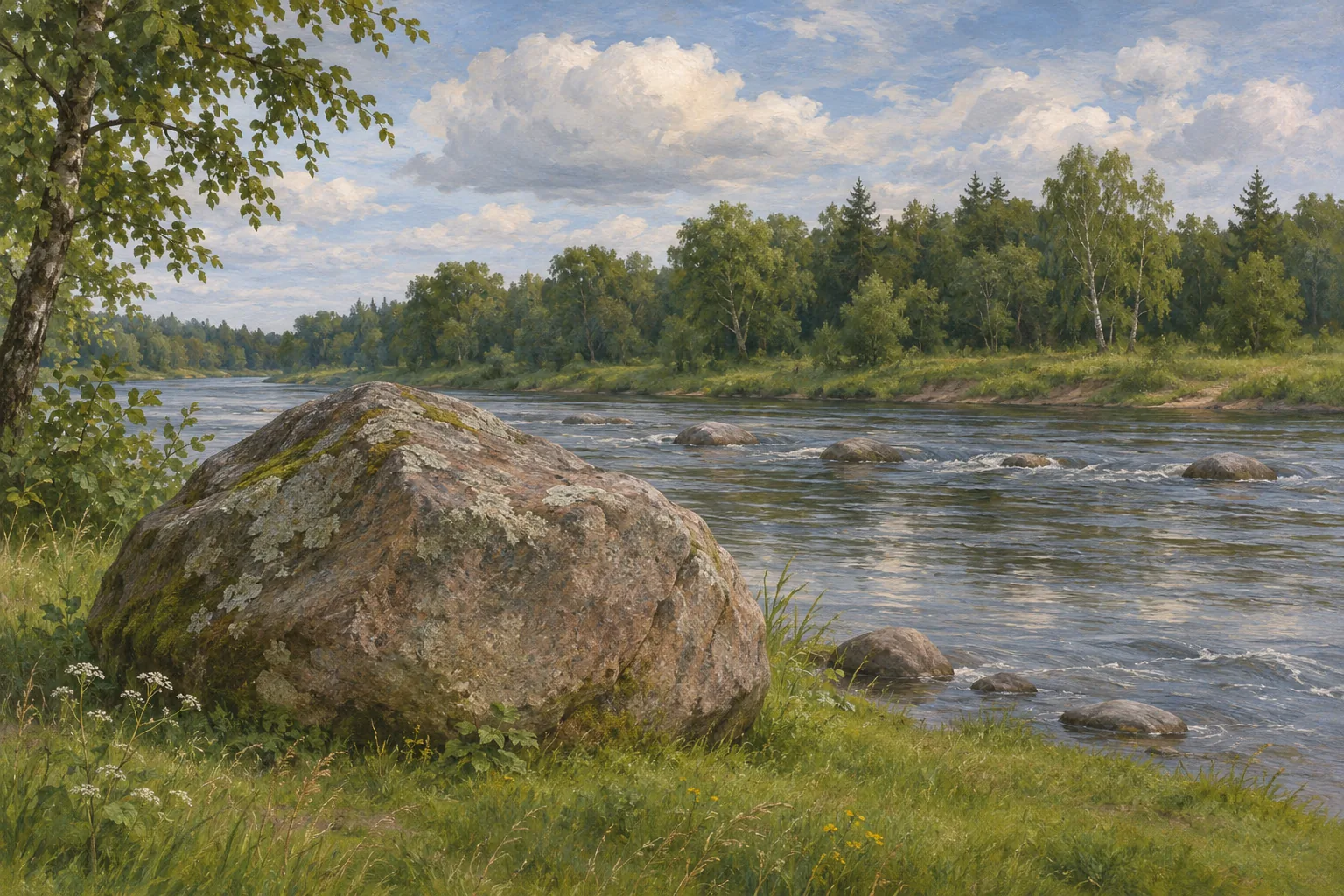
In a legend recorded at Knyzlaukiai in 1935, Mokas leaves children who strike the stones and crosses the Šventoji. His wife and daughter drown. The story later punishes people who try to break Mokas with blindness. S13
Based on: S13
1.11
What a place-name can show
Vaitkevičius distinguishes a name from a find.
Alkas is an old term for a sacred place. In 2011, Vaitkevičius distinguished a mythological place known through names and stories from a prehistoric cult site supported by material evidence. He also noted that a name containing šventas, “holy”, can refer to pre-Christian sacredness or land once belonging to a church. A name alone does not date a place. S162
Based on: S162
1.12
A village preserved in names and accounts
In Vaitkevičius’s 2008 study, documents, accounts and nearby places preserve traces of Perkūnakiemis.
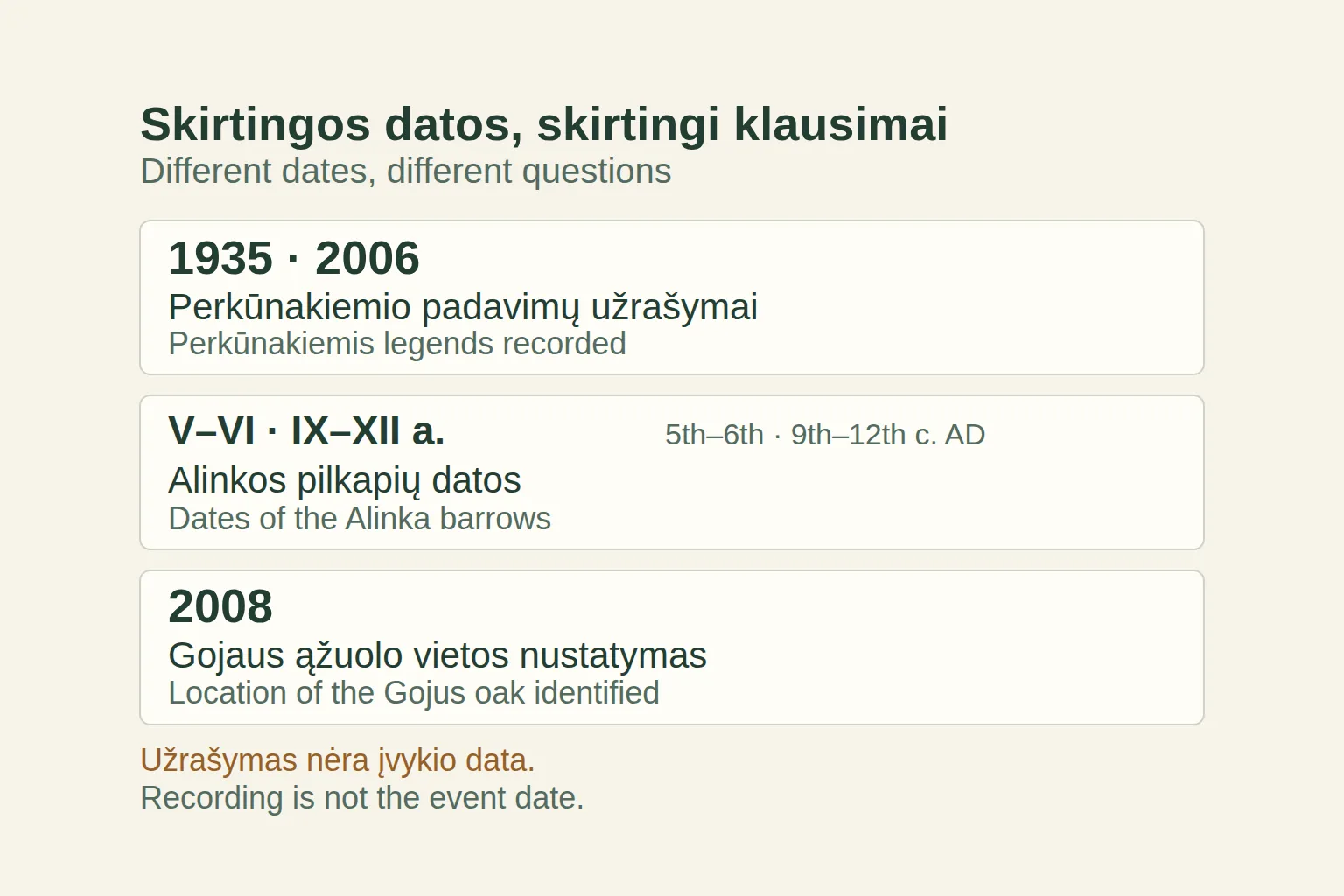
Perkūnakiemis village was destroyed during construction of the power station and Elektrėnai in the 1960s. Vaitkevičius traces forms of its name in documents of 1744, 1784, 1797 and 1843. These dates attest the written village name; they do not date the founding of a sanctuary. S163
People explained the name through lightning-struck oaks, Perkūnas and enemies he defeated. Vaitkevičius gathered texts from different times, including recordings of 1935, 2003, 2006 and 2008. These dates mark the recording of stories rather than the events within them. S163
The enemies vary: in some accounts they are Swedes, in others crusaders. Perkūnas’s intervention gives the place a distinctive past, but the variants cannot be combined into the course of a single battle. Their differences are part of the surviving body of stories. S163
Vaitkevičius sets these accounts beside the surrounding places. The village name is not the study’s only trace: Gojus, a lake, barrows and a remembered tree enter the discussion. Each connection with the stories has to be considered separately. S163
Based on: S163
1.13
A place where the oak was already gone
In 2008, researchers sought the remembered site of a tree, not a surviving ancient oak.
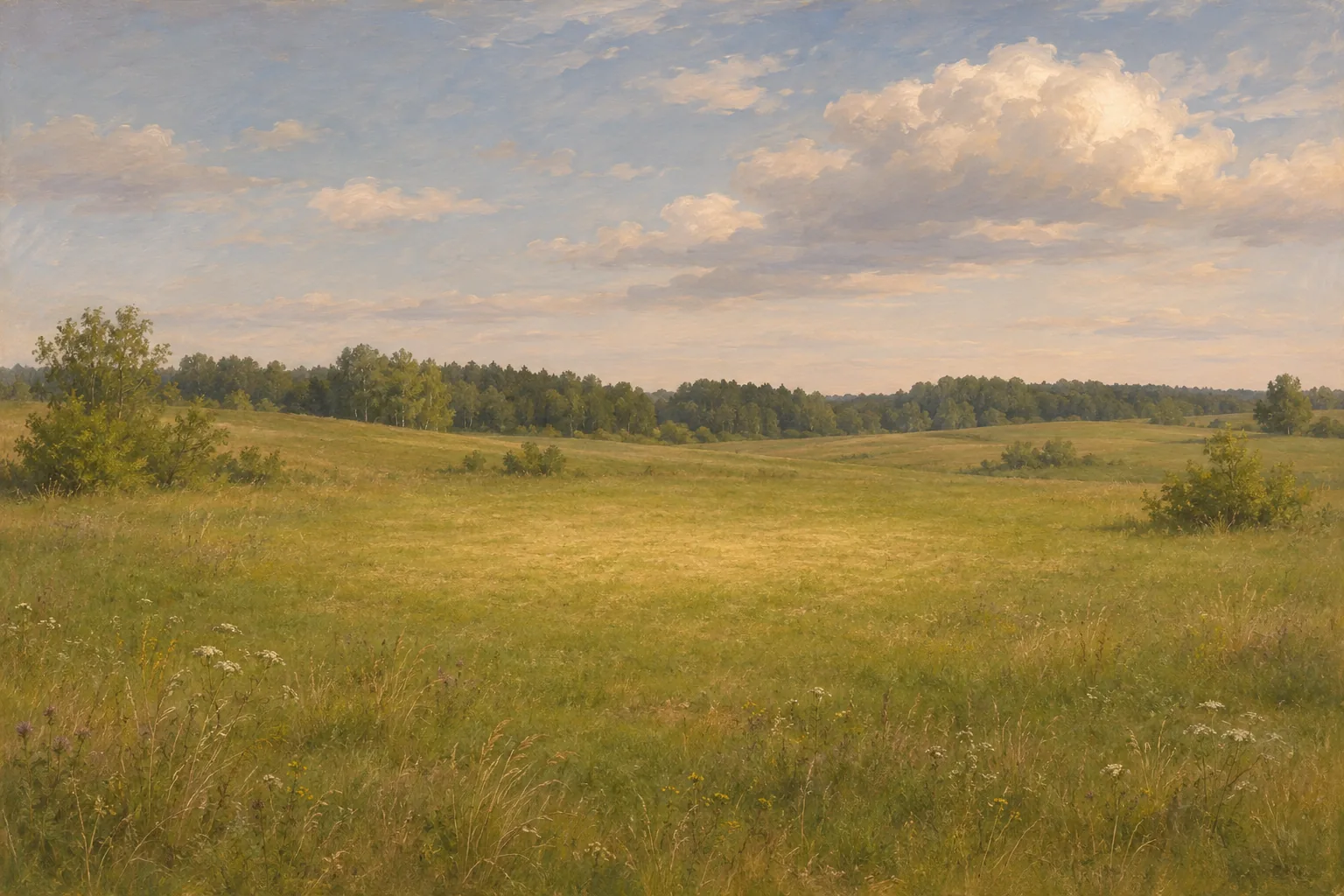
On 3 April 2008, inherited testimony was used to identify the remembered site of the Gojus holy oak. According to the information reported, the tree had been cut down before the First World War. The study’s photograph shows an open field; the oak itself is already gone. S163
The tree disappeared, but transmitted knowledge preserved its position in the landscape. Researchers could identify a remembered place. The information does not establish the tree’s age or the course of medieval rites. S163
Vaitkevičius regards Gojus as the strongest candidate for the location of a Perkūnas sanctuary. Yet in discussing the possibilities he allows that the sanctuary could have stood elsewhere and had another connection with the forest. That qualification remains alongside his proposed reconstruction. S163
Based on: S163
1.14
When a grave’s date differs from the legend
Around Perkūnakiemis, stories and objects preserve different pasts.
Some accounts call the Alinka, or Raistinė, barrows Swedish graves. Vaitkevičius reports a different archaeological dating: the fifth–sixth and ninth–twelfth centuries. These periods do not match the narrated Swedish battle. The same place preserves both graves and a legend recalling other events. S163
The author also mentions horse equipment and weapons recovered from Lake Puikinas and held in a museum. He calls for fuller investigation of their archaeological context. The objects attest finds, but do not establish the participants in the narrated battle or Perkūnas’s intervention. S163
The author distinguishes three barrow groups in the Gojus woodland: at least 40 at Gojus, four at Kloniniai Mijaugonys and six at Perkūnakiemis. These are figures published in 2008. He dates an axe from a disturbed cremation grave to the eleventh–fourteenth centuries. That broad date applies to the find, not to all the barrows or a proposed sanctuary. S163
Based on: S163
1.15
One hill, different experiences
Andrius Kaniava examines Šatrija through an account recorded in 1975.
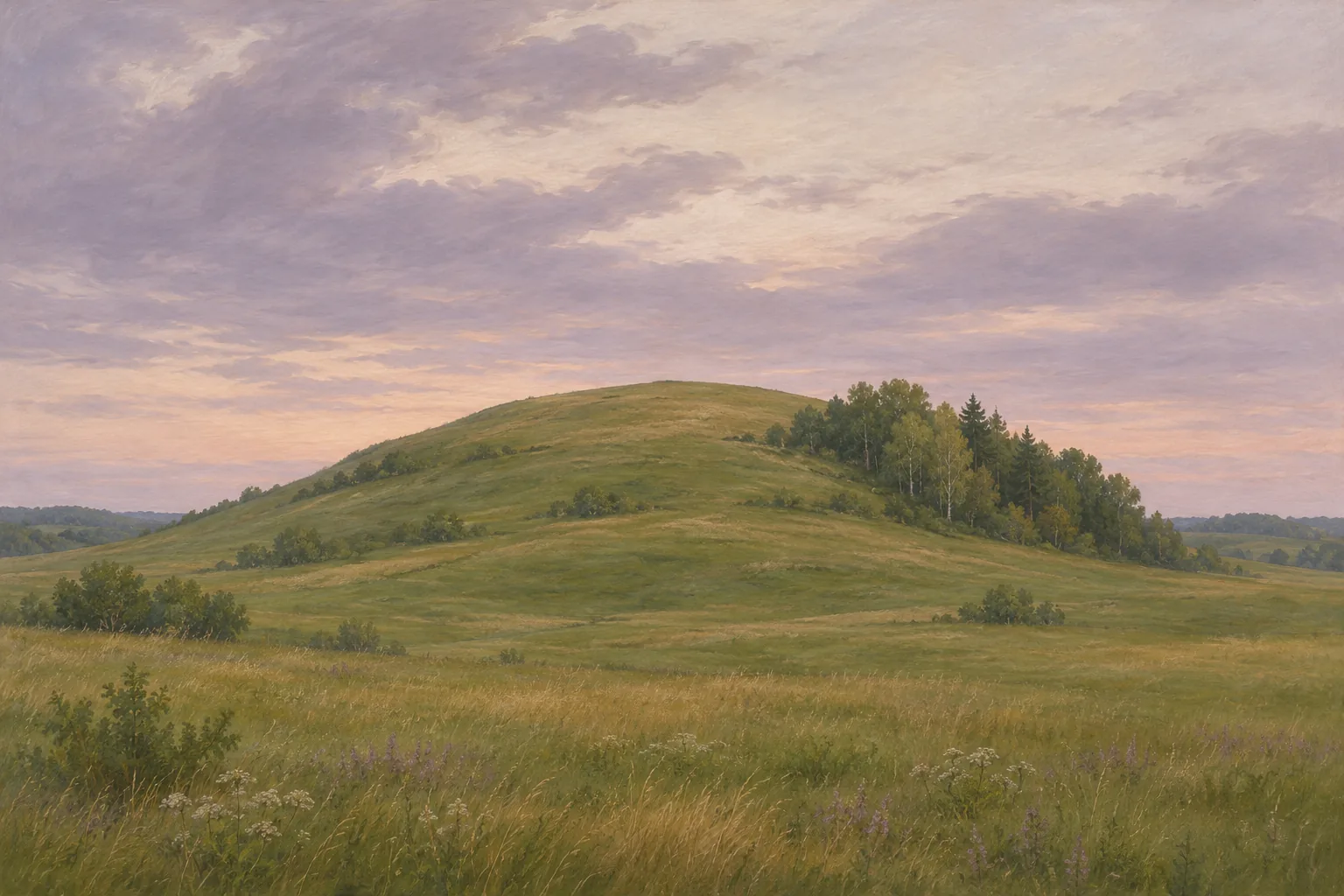
In his 2019 article, Kaniava returns to an archived Šatrija account and reports checking its text against the audio recording. Memories of St John’s festivities mingle with a bottomless-hole motif and a tale of a witch. These are threads of one account, rather than a description of medieval rites. S164
In Kaniava’s reading, the festive hill is familiar and close to home. Yet when the same person tells of the witch, the hill becomes threatening. He connects this difference with the person’s relationship to the place. One hill holds different experiences. S164
This analysis does not establish one timeless function for Šatrija. It follows how a familiar place changes within the account itself. A festive memory, a tale’s threat and the scholar’s interpretation remain distinct, although they all concern the same hill. S164
Based on: S164
1.16
The familiar lake and its narrated depths
Accounts of Plateliai lead from familiar fishing grounds to mysterious depths.
Kaniava examines accounts of Lake Plateliai recorded in 1996. People familiar with it name its corners and valksmai, fishing grounds. The surface is not an empty expanse: names divide it into familiar places connected with work and experience. S164
The fishing-ground plan reproduced in the article was found in a barn in 1946. That date does not tell us when it was made. In the plan, fishing places are named and their layout is shown: the lake is known differently than in a legend. S164
Kaniava also discusses a narrated underwater world of the dead and stories of lives taken by the lake. These depths belong to the account. They confirm neither an underwater settlement nor human sacrifice. S164
In the author’s comparison, familiar surface and mysterious depth belong to the same lake. People can know how to name and use a place while also telling of what remains beyond their understanding. That tension helps him interpret a relationship with place, rather than the structure of the lakebed. S164
Based on: S164
1.18
What a place preserves, and what a story preserves
Perkūnakiemis, Šatrija and Plateliai preserve different ways of knowing a place.
The Perkūnakiemis material preserves documents naming the village, barrows of different dates and people’s accounts. The tree has been cut down, but transmitted knowledge still identifies its site. Vaitkevičius’s proposed sanctuary location rests on comparing these traces and retains the uncertainty he himself discusses. S163
In his analysis of Šatrija and Plateliai, Kaniava asks how a place is experienced and narrated. He temporarily brackets prior religious assumptions in order to follow the account’s own movement. His method does not reject historical or archaeological research; it asks another question. S164
A barrow, the site of a vanished oak and a hill in a story preserve different things. In one case a find can be dated; in another, the recording of information or the identification of a remembered place. These dates leave room for several histories of the same place. S163 S164